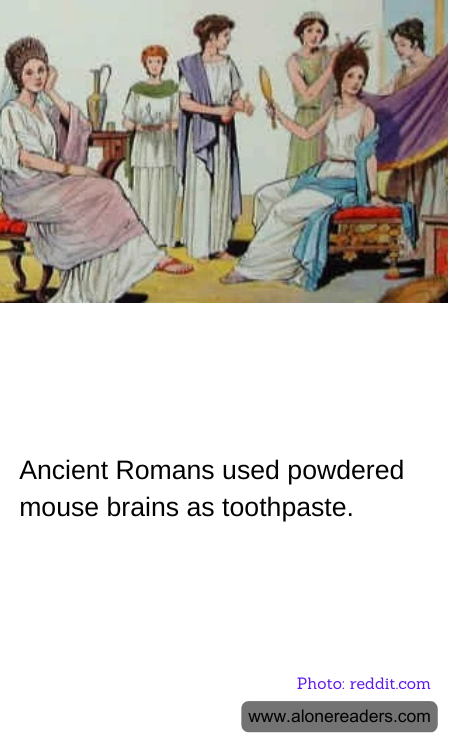
Ancient Roman personal hygiene practices have often been marked by their ingenuity and resourcefulness, a reflection of their advanced civilization. However, some of their methods can seem quite bizarre to the modern observer. Among these was the use of powdered mouse brains as toothpaste, a practice that underscores how cultural perceptions of cleanliness and medical knowledge have evolved over centuries.
The Romans were meticulous about dental hygiene, but their choices of ingredients for toothpaste were far from what we would consider conventional today. The use of powdered mouse brains reveals a unique intersection of necessity and the medicinal beliefs of the time. Animals and their various parts were commonly used in Roman medicine under the belief that these components possessed certain beneficial properties. The brains of mice, specifically, were thought to contain substances that could strengthen the gums and perhaps clean and protect the teeth.
Beyond powdered mouse brains, other ingredients used in Roman toothpaste concoctions might include crushed bones, oyster shells, charcoal, and bark. These materials were prized for their abrasive properties, helping to scrub the teeth clean. The Romans did not have sugary diets like we do today, so their dental health concerns were more about removing plaque and debris from their teeth rather than preventing decay.
The understanding of what constitutes effective and safe oral hygiene has dramatically changed since ancient times. Today, dental care is supported by scientific research, and the ingredients in toothpaste are tested for safety and efficacy. Fluoride, which helps prevent tooth decay, and mild abrasives that are safe on enamel are commonly used, a far cry from the harsh, organic abrasives of Roman times.
Exploring these ancient practices not only fascinates but also allows us to appreciate how far medical science and personal hygiene have come. It also serves as a reminder of the cultural relativity of "normal" practices, shaped immensely by the scientific understanding of each era.
