More About This Card
When dining in Egypt and Portugal, it's important to be aware of certain culinary etiquettes that reflect respect for the chef's expertise and cultural traditions. In both of these rich and historically deep-rooted countries, food is not just sustenance but also an expression of cultural identity and pride. Both Egyptians and Portuguese take great pride in their culinary traditions and recipes passed down through generations.
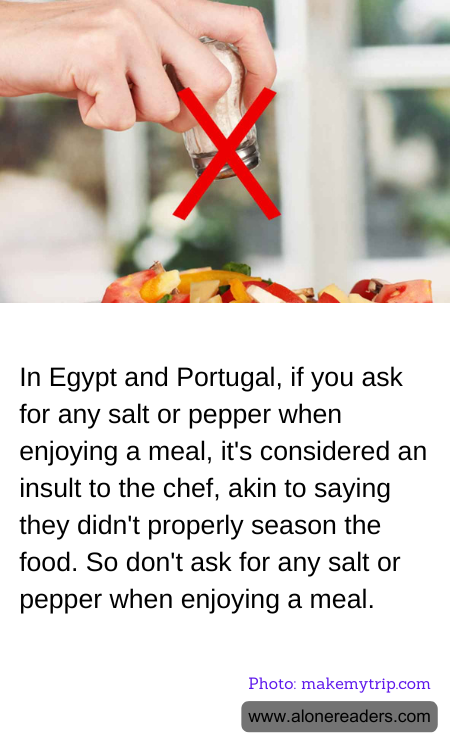
As such, asking for additional seasoning such as salt or pepper at a meal is frowned upon and can be viewed as an insult. This practice may seem unusual to foreigners given that in many cultures, condiments are routinely placed on the dining table for guests to adjust their meal to taste. However, in Egypt and Portugal, the food prepared by the chef is expected to arrive at the table perfectly seasoned. The act of requesting extra salt or pepper implies that the food was not prepared correctly, which can be seen as a critique of the chef’s skills and judgment.
Therefore, when enjoying meals in Egypt or Portugal, it is best to trust the chef's seasoning decisions and savor the dish as it is served. This approach not only allows you to experience the cuisine as locally intended but also shows respect for the culinary practices and traditions of the place. Enjoying the meal prepared for you without alterations is an acknowledgment of the chef's effort and expertise, and an opportunity to fully immerse yourself in the unique flavors that Egyptian and Portuguese cuisines have to offer.