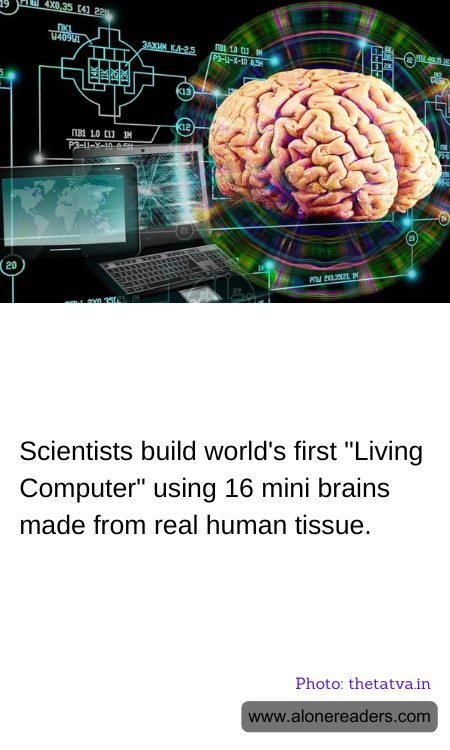
In a groundbreaking development, scientists have successfully constructed what is being hailed as the world's first "Living Computer," utilizing 16 miniature brains crafted from real human tissue. These mini-brains, or organoids, are derived from human stem cells and possess the capability to mimic many of the structural and functional aspects of a full-sized human brain on a smaller scale.
Each of these organoids measures just a few millimeters across but is packed with neurons and other brain cells, allowing them to display neural activities similar to those found in human brains. By linking these mini-brains together, researchers have managed to create a network that can handle computational tasks, merging the realms of biology and technology. This network of organoids effectively processes information using biological responses, showcasing a new form of bio-computing that could revolutionize how computers are built and function.
The potential applications of such a living computer are vast. Scientists believe that this technology could lead to more sophisticated understanding of brain disorders such as Alzheimer’s and Parkinson’s by providing a more accurate platform for testing treatments. Moreover, these organoids could pave the way for better human-machine interfaces, possibly leading to computers that can be controlled via neural impulses or even fostering advancements in artificial intelligence by mimicking natural brain processes closely.
However, this innovation doesn't come without ethical concerns. The use of human cells to create brain-like structures prompts questions about sentience, consciousness, and the rights of these biologically sourced materials. Researchers assure that these organoids are far from being conscious—lacking any sensory inputs or ability to experience pain, they cannot form perceptions or emotions.
To mitigate these concerns and explore the potential benefits, stringent ethical guidelines and rigorous scientific procedures are being followed. The scientific community continues to explore the capabilities and limitations of these living computers, ensuring that such biotechnological advancements are developed in a responsible and ethically considerate manner.
This intersection of biology and technology through the development of living computers marks a significant step forward in both fields, promising not only to innovate how we interact with machines but also offering deeper insights into the complex workings of the human brain. As this technology continues to evolve, it may soon offer solutions to some of the most persistent challenges in medicine and computing.
