More About This Card
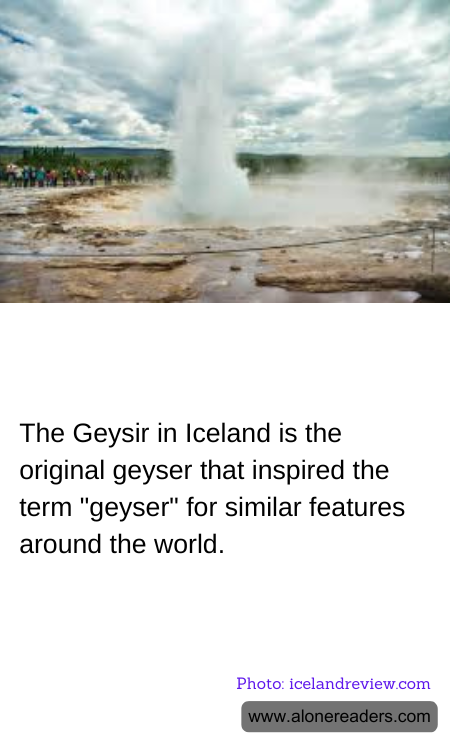
The Geysir in Iceland holds a special place in the geological and linguistic landscapes of the world, being the namesake for all geysers globally. Situated in the Haukadalur Valley, it's part of a highly active geothermal area that features boiling mud pits, fumaroles, and other hot springs. However, Geysir—also known as The Great Geysir—is the most renowned, both for its historical significance and its dramatic eruptions.
Historically, Geysir has been active for thousands of years, with records dating back to the 13th century. Its eruptions have been known to shoot boiling water up to 70 meters in the air, though in recent decades this activity has been less frequent. The word "geyser" itself originates from the Icelandic verb geysa, meaning "to gush," and was adopted into English and other languages to describe similar natural phenomena, reflecting Geysir’s fame.
The role of Geysir in tourism and scientific study has been considerable. It is one of the key attractions within the popular Golden Circle route, which also includes the Gullfoss waterfall and Þingvellir National Park. The area around Geysir allows researchers to study geothermal activities and their impact on the environment. Insights gained here contribute to the broader understanding of volcanic and tectonic processes, not just in Iceland but in similar settings around the world.
Over the years, human interaction has affected Geysir, like many natural wonders. In the past, attempts to enhance its activity by adding soap disrupted its natural behavior. Though such practices have been stopped, they serve as a reminder of the delicate balance required in managing and preserving natural sites. Today, Geysir is protected, and visitors are provided with pathways and viewing platforms to enjoy its sporadic performances safely and without impacting the geothermal features.
Despite its reduced activity, when Geysir does erupt, it provides a spectacular display of nature’s power, linking directly to the volatile forces that formed Iceland itself. The interplay of subterranean heat and earth’s geology that allows Geysir to exist is pivotal in understanding geological activity in geothermal areas elsewhere. Thus, Geysir is not only a source of natural beauty and wonder but also continues to be an invaluable natural laboratory for studying the Earth’s geothermal energy potential.