More About This Card
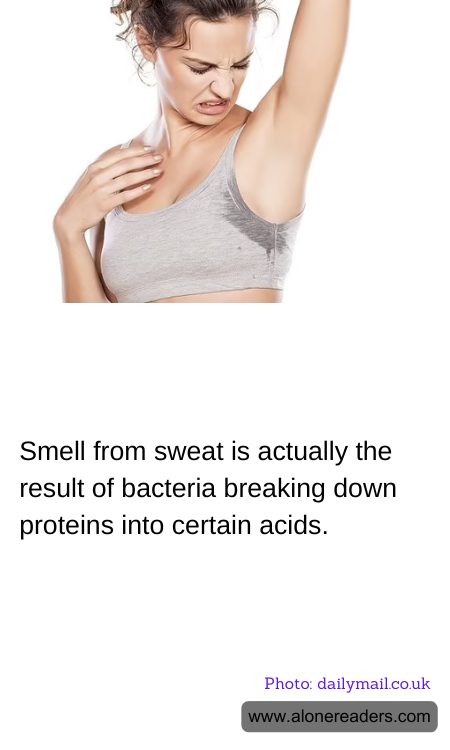
Sweat itself is virtually odorless until it combines with bacteria on the skin. The familiar and often unwelcome smell that results from sweating actually arises due to the intricate interaction between sweat and bacteria that reside naturally on our skin. Primarily, sweat is composed of water, salts, and proteins, and it is secreted by the sweat glands to help regulate the body's temperature and remove certain waste products.
There are two main types of sweat glands: eccrine and apocrine. Eccrine glands can be found all over the body and help to cool us down by releasing moisture that evaporates on the skin's surface. Apocrine glands, on the other hand, are located in areas like the armpits and groin. These glands secrete an oily fluid within the hair follicle that provides a fertile environment for bacteria. When physical exercises, temperature, or stress cause these glands to activate, the fluid they release on the skin surface is protein-rich and initially odorless.
The characteristic smell emerges when bacteria that live on the skin, such as Staphylococcus epidermidis and Propionibacterium, break down the long-chain fatty acids present in apocrine sweat into shorter, volatile fatty acids. These microbes decompose the proteins and fatty acids in sweat, converting them into substances such as ammonia and isovaleric acid. The scent produced varies depending on the individual's body chemistry, the type of bacteria present, dietary habits, and other factors.
One common misconception is that sweating more leads directly to stronger body odor. However, it's not necessarily the amount of sweat that matters but rather one’s body chemistry and the microbial population of the skin. Factors like hygiene, diet, clothing, and genetics also play significant roles. For instance, synthetic fibers tend to trap sweat closer to the skin, providing even more opportunities for bacteria to break it down into malodorous compounds.
Managing body odor is largely about controlling the bacteria on the skin. Regular washing, using antiperspirant products that contain ingredients like aluminum chloride which temporarily block sweat glands, and wearing natural fabrics that allow the skin to breathe can be effective strategies. Moreover, maintaining a diet that reduces the intake of odor-inducing foods such as garlic, onions, and spices can also help prevent strong body odors.