More About This Card
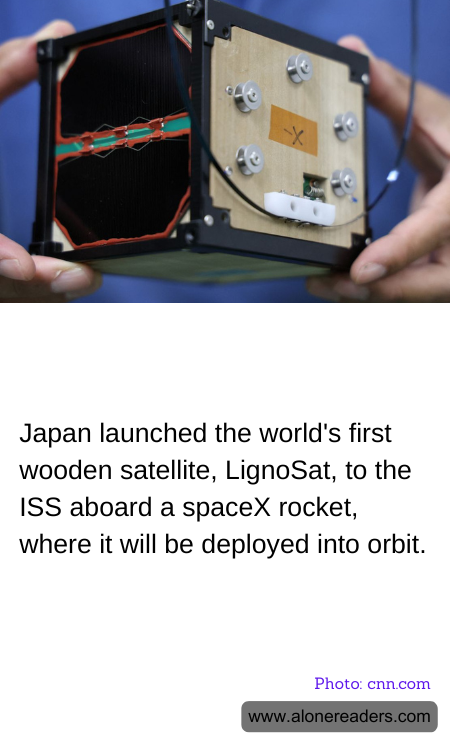
In a groundbreaking move to promote sustainability in space, Japan has launched the world’s first wooden satellite, LignoSat, to the International Space Station (ISS). The innovative satellite embarked on its journey aboard a SpaceX rocket, marking a pivotal moment in the use of eco-friendly materials for space technology.
LignoSat, designed and built through a collaborative effort between Japanese company Sumitomo Forestry and Kyoto University, is crafted primarily from wood. This choice of material is significant as it aims to reduce the problem of space debris and the Earth’s orbit pollution. Traditional satellites, made from metals and other durable materials, can remain as space junk for years after their mission ends, posing hazards to other satellites and spacecraft. Unlike these materials, wood can burn up completely upon re-entry into Earth's atmosphere, leaving no trace that could contribute to orbital clutter.
The deployment of LignoSat into orbit from the ISS is anticipated to provide valuable data on the behavior and durability of wooden materials in the harsh conditions of space, including exposure to extreme temperatures, vacuum, and solar radiation. If successful, this experiment could pave the way for more environmentally friendly satellites that are both easier to produce and safer in terms of end-of-life disposal.
Moreover, wood does not block electromagnetic signals or Earth’s own magnetic field, enabling smoother communication and potential reductions in the complexity and weight of satellite design. This can transform how satellites are manufactured and lower the cost of space missions.
This pioneering endeavor by Japan is not just a technological achievement but also a step towards a more sustainable approach in space exploration. If the use of wood proves effective, it could usher in a new era where space missions minimize environmental impact both in space and back on Earth. The eyes of the world will be watching as LignoSat orbits our planet, possibly changing the trajectory of how satellites are designed in future missions.
By launching LignoSat, Japan has contributed significantly to the ongoing conversation about sustainability in the aerospace sector. This project underlines the possibility of merging traditional materials with cutting-edge technologies to solve contemporary issues, highlighting the role innovative thinking must play in the stewardship of both Earthly environments and the expanses of space.