More About This Card
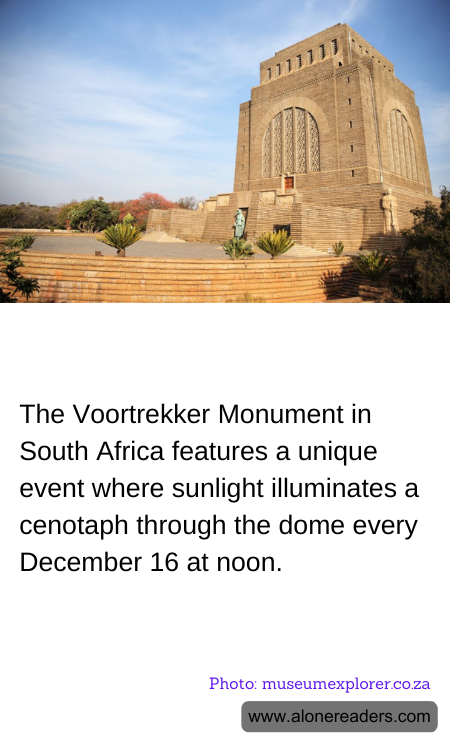
The Voortrekker Monument, located in Pretoria, South Africa, stands as a colossal granite structure, symbolically and literally towering over its landscape to commemorate the Voortrekkers. These were the Dutch settlers who, between 1835 and 1854, ventured from the Cape Colony into the interior of Southern Africa during the Great Trek. The monument, completed in 1949, is revered for its historical significance and architectural grandeur, blending elements of history with a substantial symbolic gesture embodied through an annual solar event.
Every year on December 16th, a remarkable phenomenon occurs within the walls of the Voortrekker Monument that attracts numerous visitors and reflects the symbolic heart of the monument. At precisely noon, the sun shines through an opening in the dome of the monument, casting a light on the cenotaph below, which bears the inscription, "Ons vir jou, Suid-Afrika" (Afrikaans for "We for Thee, South Africa"). This poignant moment aligns with the Day of Reconciliation, a public holiday in South Africa, which was established to foster reconciliation and national unity.
The alignment of the sunlight with the cenotaph is not only a dramatic spectacle but also a deeply symbolic gesture. The cenotaph itself represents the final resting place of the Voortrekkers who died during their journey, making the sunlight's annual visitation a symbolic re-enactment of divine blessing or approval for their sacrifice. The timing of the light's alignment, precisely at noon, when the sun is at its highest point, emphasizes the moment's significance, highlighting the zenith of the sun's journey across the sky.
This event deeply resonates historical and cultural significances, drawing parallels between the endurance of the Voortrekkers and the strength and survival of the South African people. It also serves to reflect upon the broader themes of journey, sacrifice, and the quest for light and enlightenment. The Voortrekker Monument's architectural design, focused on maximizing the impact of this light event, reflects a masterful intertwining of structure with the natural environment, utilizing sunlight to unite past and present narratives, a reminder of the enduring spirit embodied by the Voortrekkers and celebrated by successive generations.
As the sunlight bathes the cenotaph in its warm, luminous glow, spectators are invited not only to reflect on the historical journey of the Voortrekkers but also to consider the ongoing journey of reconciliation and unity in South Africa. This annual event captures a moment of convergence where architecture, history, and symbolism interplay to create a poignant reminder of South Africa's complex past and the continual efforts towards a harmonious future.