More About This Card
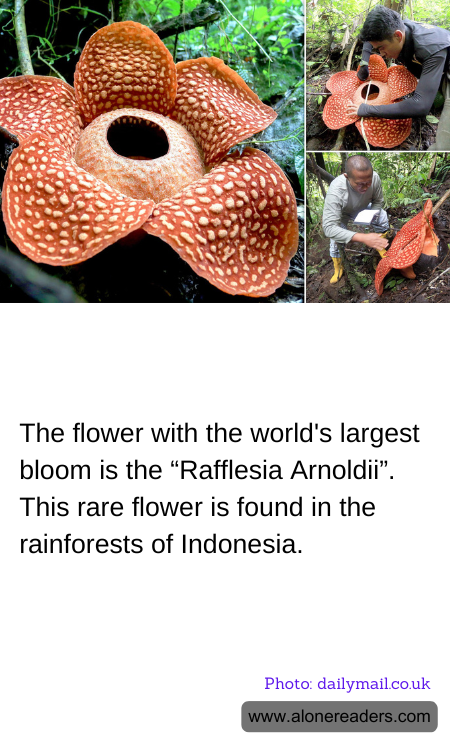
The Rafflesia arnoldii, often simply referred to as the Rafflesia, holds the distinction of producing the largest single flower on Earth. Native to the rainforests of Indonesia, particularly in Sumatra and Borneo, this plant has long fascinated scientists and nature enthusiasts alike with its extraordinary size and unique characteristics.
Rafflesia’s bloom can reach up to 3 feet (1 meter) in diameter and weigh up to 24 pounds (11 kilograms). What makes the Rafflesia particularly unusual is that it has no visible leaves, stems, or roots. Instead, it is a holoparasitic organism, relying entirely on a host plant for water and nutrients. This parasitic relationship primarily involves the Tetrastigma vine, indigenous to the Rafflesia's rainforest habitat.
Adding to its intrigue, the Rafflesia is known for emitting a strong odor of decaying flesh during its bloom period, which typically lasts for just a few days. This scent serves an important purpose: it attracts carrion flies that help with pollination. The lifecycle of this floral giant is equally peculiar. Most of the time, the Rafflesia remains hidden within its host plant, visible only when it is ready to reproduce. The flower then emerges from what appears to be a small brownish bud on the host plant, eventually opening up to reveal its massive, flesh-colored petals.
Conservationists are concerned about the future of the Rafflesia due to deforestation and the degradation of its rainforest habitat. Its rarity and the specific ecological conditions required for its survival make it particularly vulnerable. Environmental protection efforts are crucial to ensure that future generations may also have the opportunity to witness the spectacular bloom of the Rafflesia arnoldii.
The Rafflesia not only symbolizes the delicate balance of tropical ecosystems but also highlights the extraordinary adaptations that some species undergo to thrive in niche environments. Through continued research and conservation, there is hope that this remarkable species can be preserved, shedding light on both the complexities and wonders of ecological interdependence.