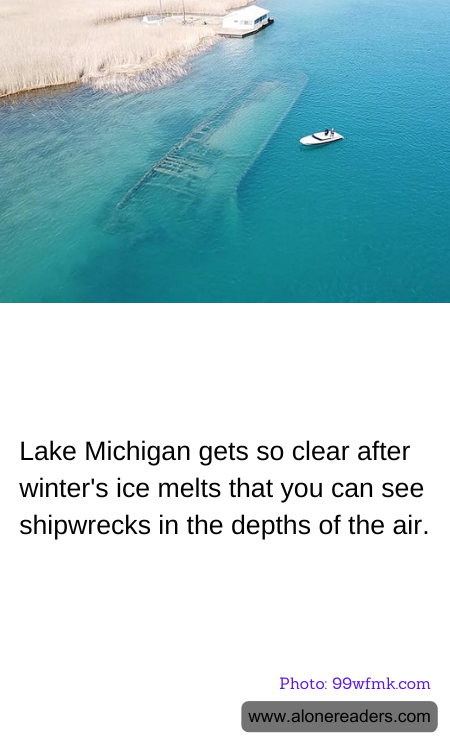
As winter yields to spring, the icy grip on Lake Michigan loosens, unveiling sights hidden beneath its frosty surface. One of the most captivating phenomena observed is the visibility of historic shipwrecks, resting eerily in the lake’s depths. As the thick ice sheets melt away, they temporarily leave behind exceptionally clear waters, creating perfect conditions for this glimpse into the lake's maritime history. This clarity is attributed to the reduced run-off during the winter months, which means fewer pollutants and sediments are disturbed and dispersed into the water.
The Great Lakes, with Lake Michigan included, have been a major conduit for transportation and trade since the 17th century. The area is no stranger to fierce storms and unpredictable weather, which have claimed numerous vessels over the centuries. The cold, fresh water of Lake Michigan is particularly well-suited for preserving the remnants of these tragedies. In the chilling, yet crystal-clear depths, the wooden planks and iron bolts of sunken ships remain remarkably intact, protected from the decaying effects of salt and warmer temperatures.
The sight of these shipwrecks from above is not just a stark reminder of the perils of maritime journeys of old, but also an intriguing allure for tourists and history enthusiasts. The presence of ships such as the SS Michigan and the Westmoreland, each with its own tale of woe, nestled on the lakebed, adds a layer of profound authenticity to the lake's storied past. During periods of high water clarity, local tour operators and park services often seize the opportunity to conduct boat tours, offering both locals and tourists a chance to gaze down into the watery graves of these historic vessels.
Moreover, this phenomenon provides scientists and historians with easier access to study these sites for educational and preservation purposes. Each year, diving expeditions and underwater photography projects are carried out to document and analyze the condition of the wrecks and the aquatic life that teems around them. This not only helps in understanding the ecological impacts on the shipwrecks but also aids in monitoring the overall health of Lake Michigan.
Thus, the melting of the ice and the consequential clarity of Lake Michigan's waters serve as an annual window into a submerged museum of maritime history. It is a natural exhibit that underscores the lake’s historical significance and its ongoing natural wonder, inviting both introspection about our past and consideration for preserving such treasures for future generations.
