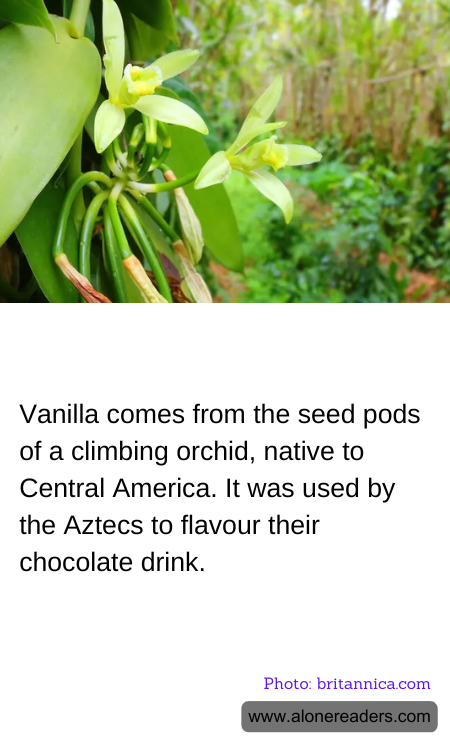
More About This Card
Vanilla, renowned for its fragrant and flavorful characteristics, originates from the seed pods of Vanilla planifolia, a species of orchid. This climbing orchid is indigenous to Central America, particularly areas what are now Mexico and Guatemala. Historically, the Totonac people of Mexico's east coast were among the first to domesticate the vanilla orchid. Following them, the Aztecs conquered the Totonacs and acquired the vanilla vines. The Aztecs were known to use vanilla to enhance their chocolate drink xocolatl—a luxury concoction of cocoa beans, vanilla, and other spices—which was consumed primarily by the elite and used in ceremonial rituals.
In the 15th century, vanilla caught the attention of the Spanish conquistadors who brought it back to Europe following their conquest of the Aztec empire. This introduction marked the beginning of vanilla's global journey. Despite its immense popularity in European kitchens, cultivating vanilla outside of its native habitat proved challenging, as the specific bee pollinator, the Melipona bee, was only found in Mexico. It wasn't until the mid-19th century that a viable method for hand-pollinating vanilla was developed on the island of Réunion, a technique that opened the doors for wide-scale cultivation in various tropical regions across the world.
Today, vanilla is cultivated in several parts of the world, with Madagascar, Indonesia, and Mexico being the leading producers. The process of growing vanilla is labor-intensive and requires a great deal of patience. From hand-pollination to the lengthy curing process required to develop vanilla’s signature aroma and flavor, each step is meticulously executed. Vanilla beans are harvested while still green and immature, undergoing a curing process that involves blanching, sweating, slow drying, and several months of fermentation. This intricate process helps to develop the beans’ distinctive dark color and complex flavor profile.
The popularity of vanilla has grown tremendously, making it a staple in culinary applications worldwide. Its delicate, sweet flavor makes it a preferred ingredient in baked goods, desserts, and beverages. However, the extensive labor involved in vanilla cultivation makes it one of the most expensive spices in the world, second only to saffron. Despite advancements and increases in production, the demand for natural vanilla continues to exceed the supply, making its market highly susceptible to price volatility.
The history of vanilla from its origins in ancient Mesoamerica to its status as a beloved global flavor is a testament to its unique appeal and the intricate, time-consuming efforts involved in its production. From the sacred rituals of the Aztecs to the kitchens of modern-day chefs and food enthusiasts, vanilla continues to captivate and enhance culinary experiences around the world.