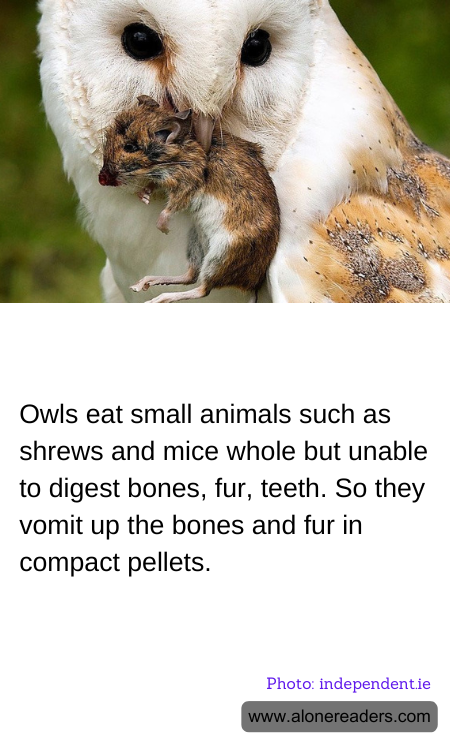
Owls are remarkable birds of prey, known not only for their distinctive calls and nocturnal habits but also for their unique method of digesting food. Unlike many other birds, owls often consume their prey whole. This means they ingest not only the flesh but also the bones, fur, and teeth, which are all parts of their diet. However, these components are indigestible for the owls, necessitating a special process to handle this aspect of their digestion.
Since owls don't have teeth to chew their food, they rely on their powerful beaks to tear apart larger prey into manageable pieces. However, smaller animals such as mice, shrews, and other tiny rodents are often swallowed whole. Inside the owl's digestive tract lies a specialized organ called the gizzard, which helps filter out and separate the digestible parts from the indigestible materials. The digestible parts are then processed and absorbed as nutrients, providing energy and sustenance to the owl.
The indigestible materials, such as the bones, fur, and teeth, need to be expelled from the owl's body. Since they cannot pass through the digestive tract safely, they are instead formed into what are known as "pellets" within the gizzard. These pellets are tightly compacted masses containing all the undigested parts of an owl's meal. Eventually, the owl regurgitates these pellets, a process which generally occurs a few hours after eating. The act of expelling these pellets is essential as it helps prevent blockages or other complications within the owl’s digestive system.
Studying these pellets provides a fascinating insight into the dietary habits of owls and can be an essential tool for biologists and researchers. By carefully dissecting owl pellets, scientists can identify the types and quantities of prey that owls are consuming in a particular area, offering valuable information on both the local owl population and the ecosystem's health. Moreover, these findings can help in the conservation efforts for owls, as understanding their feeding patterns is crucial for protecting their natural habitats and ensuring a stable food supply.
In conclusion, the process by which owls handle the indigestible parts of their food is a brilliant example of adaptation in the animal kingdom. Not only does this method keep the owls healthy, but it also provides an opportunity for learning more about the intricate balance of nature, demonstrating once again how every creature has a role to play in maintaining the biodiversity of our planet.
