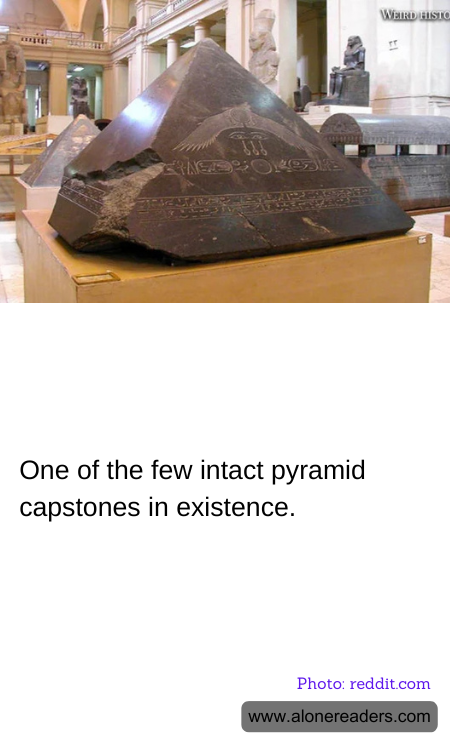
Pyramid capstones, also known as pyramidions, are the topmost pieces of ancient pyramids, crafted with striking precision and often made from a different material than the main structure. These capstones were highly significant in ancient Egyptian architecture, symbolizing the rays of the sun and serving as a physical representation of the sun god Ra’s benediction upon the pharaoh. Not only were they architectural crowns that completed the pyramid’s shape, but they were also believed to harbor divine powers that connected the pharaohs with the gods.
One of the few intact pyramid capstones known today can be found at the head of the Red Pyramid at Dahshur, among the oldest, largest, and best-preserved efforts of Egyptian pyramid construction. It represents a valuable piece of historical architecture, giving insight into ancient building techniques and the religious sentiments of the time.
These capstones were typically enveloped in gold or electrum (an alloy of gold and silver) which reflected the sun’s light, making the pyramid shine brilliantly and visible from great distances. This vivid display served as a demonstration of the wealth and power of the pharaoh, as well as a testament to the advanced metallurgical skills of ancient Egypt.
Archaeologists and historians cherish these remaining capstones for the wealth of information they provide about the symbolic implications and the practical aspects of pyramid construction. Unlike many of the larger blocks that make up the bulk of the pyramids, which were hewn from quarried limestone, capstones were often carved from more durable materials like granite or basalt, contributing to their enduring nature.
The craftsmanship and usage of capstones highlight a civilization that was deeply invested in the confluence of aesthetic beauty, spiritual expression, and technological advancement. The few remaining examples of intact pyramid capstones offer not just a glimpse into ancient engineering and religious practices but also inspire awe for their enduring beauty and mystique, forever capturing the essence of ancient Egypt’s grandeur.
