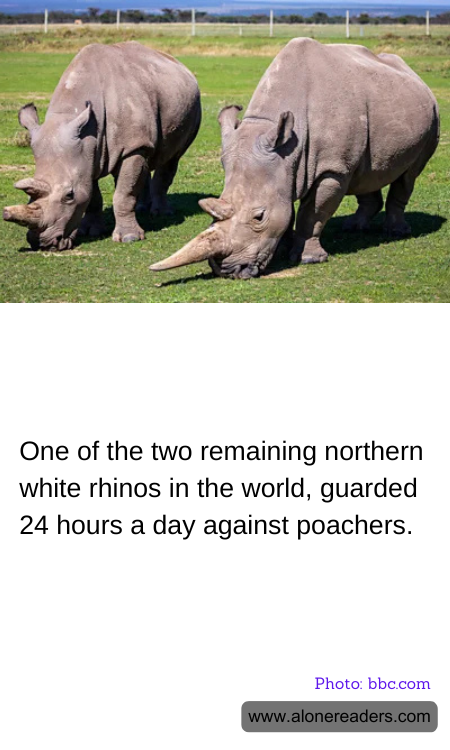
The plight of the northern white rhino has reached a heart-wrenching climax as only two of these majestic creatures remain on the planet, both of whom are females. Named Najin and Fatu, these rhinos are under constant surveillance at the Ol Pejeta Conservancy in Kenya, a measure that underscores the grave threat of poaching driven by the lucrative market for rhino horns. These animals are guarded 24 hours a day, signaling a poignant reality in the conservation efforts to save a species teetering on the brink of extinction.
The guards, dedicated to the protection of Najin and Fatu, play a critical role not only in ensuring their safety but also in maintaining the day-to-day welfare of these last survivors of their subspecies. Their duties are augmented by the use of surveillance technologies such as GPS tracking and infrared cameras, designed to ward off potential threats and to monitor the rhinos’ health and behavior closely. The presence of guards is a somber reminder of the devastating impact of human greed on wildlife, where each rhino’s horn could fetch up to $300,000 on the black market.
Beyond the immediate protection efforts, the conservation team is pioneering sophisticated reproductive technologies in an attempt to rescue the northern white rhino from extinction. Since both remaining rhinos are females and incapable of natural reproduction due to health issues, scientists are focusing on advanced techniques such as in-vitro fertilization (IVF) using preserved sperm from deceased males and possible surrogate mothers from the closely related southern white rhino subspecies.
These strategic endeavors not only highlight the complex challenges faced in wildlife conservation but also represent a fusion of hope and innovation at the cutting edge of science. However, such attempts have met with limited success so far and are fraught with ethical and procedural complexities. The uncertain future of the northern white rhino is a stark illustration of the broader crisis facing biodiversity globally, driven by illegal wildlife trade, habitat loss, and changes in climate.
Ultimately, the story of Najin and Fatu is a clarion call for increased global commitment and cooperation in tackling illegal poaching and in promoting wildlife conservation. It’s a reminder that each species holds intrinsic value to ecological balance and once lost, their absence reverberates beyond immediate environmental impacts, marking an irreplaceable loss to natural heritage and biodiversity. As the world watches the fate of these rhinos unfold, their legacy, irrespective of outcome, will undoubtedly shape conservation strategies and awareness for endangered species worldwide.
