More About This Card
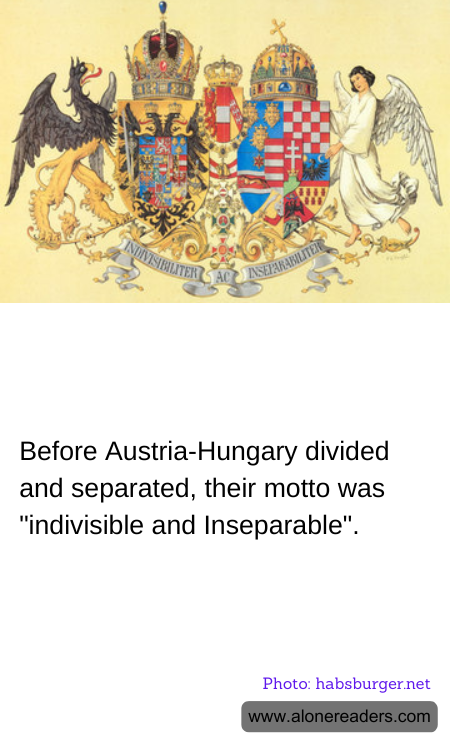
The Austro-Hungarian Empire, a geopolitical entity in existence from 1867 to 1918, was a dual monarchy formed by the union of the Austrian Empire and the Kingdom of Hungary. This unique setup emerged following the Austro-Hungarian Compromise of 1867, aimed at calming nationalistic tensions after Austria's defeat in the Austro-Prussian War. The phrase "indivisible and inseparable" captures the essence of the union's intended permanence and unity between the Austrian and Hungarian regions, despite their distinct administrative and political frameworks and diverse ethnic compositions.
This motto embodied the concept that the two regions would not function as separate entities but would operate jointly, sharing common foreign, military, and financial policies while maintaining distinct domestic affairs. This arrangement was an innovative political experiment of its time, recognizing the mutual benefits of economic and military cooperation while allowing each region to preserve its cultural and linguistic heritage.
The empire included a vast array of territories and ethnic groups, housing Germans, Hungarians, Czechs, Slovaks, Romanians, Croats, Poles, Serbs, Italians, and other nationalities. This diversity was both a strength and a challenge, as it contributed to a rich cultural mosaic but also posed significant governmental and integration issues. The motto, therefore, served as a rallying call for unity and coherence across the empire's diverse populations and was instrumental in its attempts to project stability and unity externally.
Despite the ideal encapsulated in their motto, the empire faced tumultuous challenges from within—rising nationalism among various ethnic groups strained the delicate balance maintained between Austria and Hungary. World War I further exacerbated these pressures, leading to military defeats and economic hardships. The strains became insurmountable, and the once purportedly "indivisible and inseparable" empire began to unravel.
The dissolution of the Austro-Hungarian Empire came in 1918, at the end of World War I, when various nationalist movements reached their zenith, leading to the proclamation of independence by several constituent territories. The Treaty of Trianon in 1920 formally concluded the empire's existence, making way for the reconfiguration of the region into several independent nation-states.
Thus, the motto "indivisible and inseparable" remains a fascinating historical footnote, reflective of the hopes for unity and common purpose that ultimately fell victim to the complex realities of ethnic nationalism and the catastrophic impacts of international conflict.