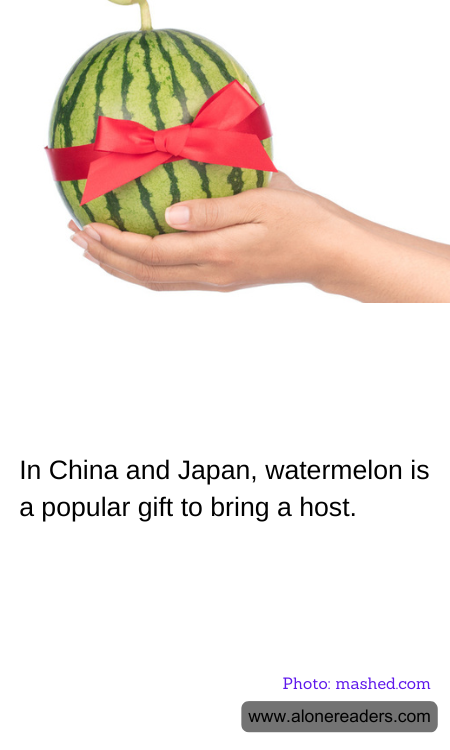
In both China and Japan, the practice of gifting watermelons is rooted in deeply held cultural traditions and is considered a thoughtful and respectful gesture when visiting someone's home. Watermelons are not only appreciated for their refreshing sweetness but also symbolize hospitality and generosity, making them an ideal gift for hosts in these countries.
In China, watermelon is often associated with summer and is popular during the hot months for its hydrating properties, as it is composed of about 92% water. The gift of a watermelon is symbolically rich, often seen as an offering of cool relief and health. During the Chinese New Year and other festivals, watermelons are sometimes intricately carved into beautiful designs, enhancing their visual appeal and demonstrating the giver's respect and good wishes toward the recipient.
Similarly, in Japan, watermelons are a luxurious and cherished item, often given as gifts in the summertime. Known in Japanese as "suika," these fruits are prized for their perfect round shape and sweet taste. The Japanese also place a high value on seasonality and the presentation of gifts, which is evident in the careful wrapping and presentation of watermelons when they are given as presents. It's not uncommon to see watermelons wrapped in elegant ribbons and placed in sturdy, decorative boxes, emphasizing the importance of aesthetics and respect in Japanese gift-giving culture.
Moreover, the act of giving a watermelon can also be seen as a gesture of wishing prosperity and good health, echoing broader Asian traditions that closely link food and well-being. By offering a host a watermelon, the guest is symbolically expressing hope for their host's happiness and prosperity.
Despite their differing cultural contexts, both Chinese and Japanese cultures share this commonality in using watermelon as a means to convey respect, making it a beloved and traditional gesture suitable for many occasions.
