More About This Card
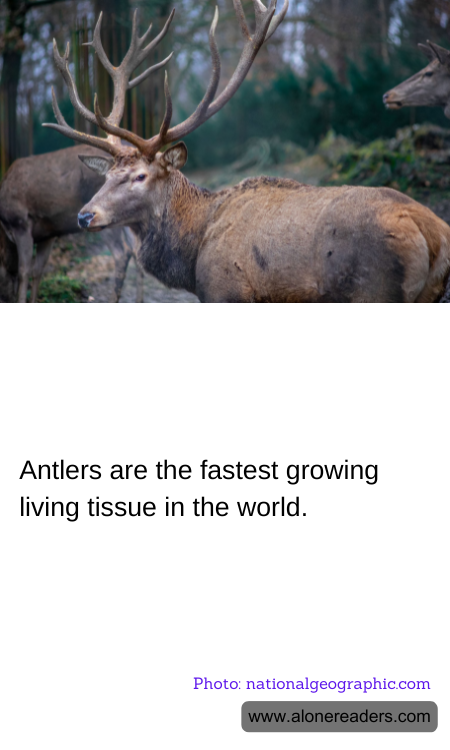
Antlers are a fascinating and unique characteristic of the deer family, including species such as moose, elk, and reindeer, among others. They are the fastest-growing living tissue on Earth, a fact that might sound astounding but reflects the remarkable processes of nature. Antlers grow incredibly fast, at a rate of up to an inch a day during peak periods, facilitated by a rich covering of a highly vascularized skin known as velvet, which supplies nutrients and oxygen to the growing bone.
The rapid growth of antlers is primarily fueled by hormones, particularly testosterone, linked to the photoperiod—this means the growth rate is influenced by the length of daylight, which is why most antler growth occurs in the spring and summer. The antlers are formed from cartilage and then gradually replaced by bone through a process known as ossification. The velvet absorbs calcium and phosphorus from the deer’s diet, essential minerals for the hardening of the antlers.
Once the antlers have fully developed, which can take from 2 to 4 months, the velvet is no longer needed and the animals often rub it off on trees and shrubs. After the mating season, which antlers primarily serve to enhance a male deer's appearance for attracting mates and to battle with competing males, they are no longer necessary and are shed. The shedding process gives way to a new cycle of growth, starting again each spring.
Antlers are also used as tools beyond combat and mating display. For instance, deer might use their antlers to clear snow from the ground in order to access food during winter. Historically, antlers have had various uses in human culture too, including as tools, weapons, ornaments, and in traditional medicine.
Interestingly, antler growth can be an indicator of a deer's nutritional status and overall health. Good antler growth often correlates with a rich diet full of the necessary nutrients, while poor growth might indicate nutritional deficiencies or other health issues in the animal.
The phenomenon of antler growth presents not only an extraordinary example of rapid biological development but also a stark indicator of wildlife health and vitality. This continuous cycle highlights the close connection between an animal's physiological condition, its environment, and the seasonal patterns dictated by nature.