More About This Card
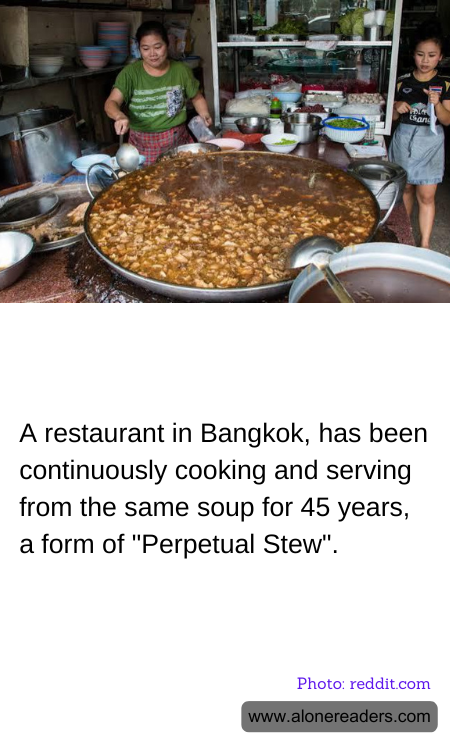
In the bustling heart of Bangkok, Thailand, there exists a culinary phenomenon that both captivates and intrigues food enthusiasts from around the globe. A local restaurant, known for its traditional Thai dishes, has sustained a unique tradition for over 45 years—cooking and serving from the same perpetual soup. This perpetual stew, or "hunter’s pot," as it is referred to in some cultures, is a soup that is never fully consumed and continuously replenished with fresh ingredients, allowing the base broth to deepen in complexity and flavor over decades.
The concept of a perpetual stew is not unique to Thailand; it has historical roots across various cultures, including medieval Europe where it was economical and practical for kitchens to maintain a constantly simmering pot over the fire. In this Bangkok restaurant, the stew serves as a living relic of culinary history, an ongoing experiment in flavors, and a testament to sustainable cooking practices.
Each day, new ingredients such as meat, vegetables, and spices are added to the pot. Over time, these contribute to the evolving flavor profile of the soup. The stew is maintained at a simmer, ensuring safety and preventing spoilage, while the heat allows the various components to meld together harmoniously. Regulars at the restaurant claim that the depth and richness of the soup cannot be replicated, as it carries the culinary legacy of the many years it has been simmering.
The stew is not just about taste, but is also steeped in a sense of community and continuity. For the patrons of the restaurant, eating the soup is a participatory experience in a historical journey. Each bowl served is both a glimpse into the past and a foundation for future flavors. This shows a profound appreciation for conservation and an understanding of the value added by time and dedication, principles that resonate deeply in Thai culture.
Moreover, the perpetual stew at this Bangkok restaurant encapsulates the Thai principle of balancing flavors—sweet, sour, salty, bitter, and umami—which is foundational to Thai cooking. It represents a living embodiment of culinary adaptation and survival, turning simple cooking methods into profound cultural expressions.
This unique culinary endeavor not only attracts tourists but also serves as a case study in food sustainability, showing how continuous cooking and consumption can reduce waste while enhancing flavors. As it stands, this perpetual stew is not merely a dish but a symbol of cultural perseverance, culinary innovation, and the endless possibilities that traditional cooking methods can offer in a modern world.