More About This Card
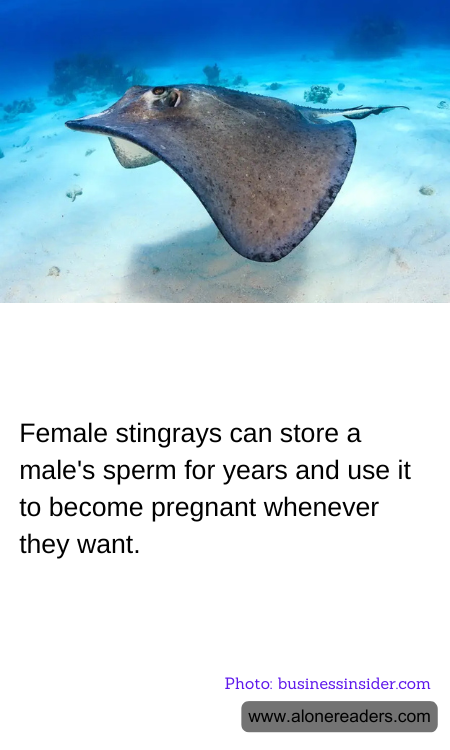
Female stingrays possess a remarkable reproductive ability that allows them to store sperm from male stingrays for extended periods, sometimes even for years, before using it to fertilize their eggs. This capability provides them with a considerable advantage in their often sparse and unpredictable underwater environments, where encountering a suitable mate can be a challenging affair.
This adaptation, known as sperm storage, is not exclusive to stingrays but is a fascinating feature in the reproductive strategy of many aquatic species, including some sharks and reptiles. In stingrays, the females have specialized organs called spermathecae that are specifically designed for storing sperm. These organs protect the sperm from bacterial infection and from losing its fertilizing capability over time.
The ability to control the timing of pregnancy is crucial for female stingrays. It allows them to optimize the conditions under which their young are born, which is essential for the survival of the offspring. For instance, they might delay fertilization until environmental conditions, such as water temperature and availability of food sources, are favorable for the hatchlings. Additionally, this ability ensures that female stingrays can reproduce even in the absence of males for prolonged durations.
Moreover, the long-term storage of sperm can lead to multiple gestations from a single mating session. Once the female decides to use the stored sperm, the fertilization of the eggs takes place internally. Stingrays are ovoviviparous, meaning the eggs develop and hatch inside the female’s body, and she then gives birth to live young. This method of reproduction further enhances the survival rates of the newborn stingrays, offering them a head start by safeguarding them from predators during their earliest and most vulnerable stages.
The intriguing aspect of sperm storage in female stingrays not only highlights their unique adaptation to marine life but also underscores the complexity of reproductive strategies in nature. Such mechanisms add a layer of depth to our understanding of how aquatic life-forms maximize their chances of reproductive success in the vast and variable ocean ecosystem. As researchers continue to study these phenomena, they uncover more about the interconnectedness of life forms and the evolutionary innovations that sustain them through changing environments and climatic conditions.