More About This Card
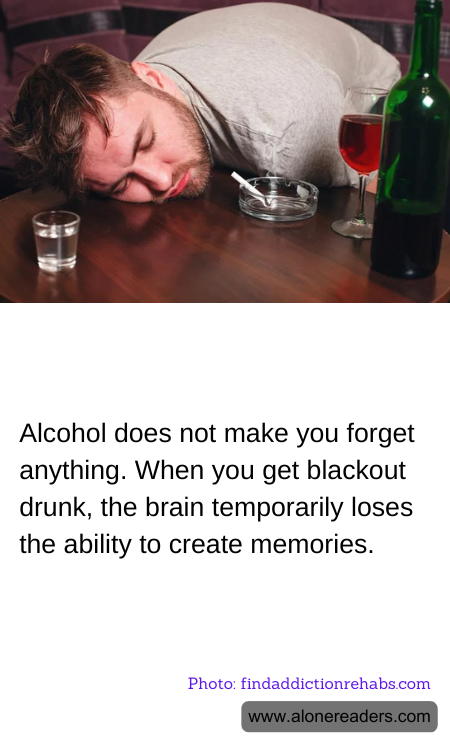
Alcohol is often thought of as a substance that can make you forget your worries and troubles. It’s a common belief that drinking can lead you to forget events, especially if you drink to the point of a blackout. However, it is crucial to understand that alcohol does not erase memories. Instead, high levels of alcohol consumption can impair the brain's ability to create new memories during the time of intoxication.
When someone drinks alcohol to the extent of becoming blackout drunk, they're experiencing a specific form of memory loss called an alcohol-induced blackout. This does not mean their brain is erasing memories that were formed before drinking. Rather, what happens during a blackout is a disruption in the brain’s ability to transfer new information from short-term to long-term storage. This type of memory failure means that while a person can engage in conversations, make decisions, or even perform complex tasks like driving during a blackout (although they should not), they might not remember any of those actions later.
This memory disruption is primarily because alcohol affects the hippocampus, the region of the brain crucial for forming new memories. Normally, neurons in the hippocampus create new memories by firing electrical charges that help encode experiences as memories. Alcohol slows down or blocks these signals, thus preventing the formation of new memories during the time of intoxication.
The phenomenon of blackouts is more common than many might think and does not require one to be an alcoholic. It can happen to anyone who consumes alcohol rapidly, especially on an empty stomach or after having insufficient sleep. The ability to blackout is influenced by individual differences in how the body processes alcohol. For instance, certain genetic factors can make someone more susceptible to blackouts. Additionally, combining alcohol with certain medications can increase both the risk and severity of blackouts.
Understanding these effects is important, especially for individuals who frequently drink to excess. Regularly experiencing blackouts can be an indicator of problematic drinking behaviors that might require addressing. More critically, a lack of memory does not mean a lack of consequence. Decision-making and risk assessment skills are severely hampered during blackouts, increasing the likelihood of accidents, injuries, or other harmful behaviors.
In conclusion, while it's often depicted in pop culture as a means to forget, alcohol does not genuinely make one forget in the traditional sense. Instead, it prevents the brain from making new memories while under its influence, which can lead to gaps in memory known as blackouts. Recognizing the implications of this on personal health and safety can better equip individuals to make informed decisions about their alcohol consumption.