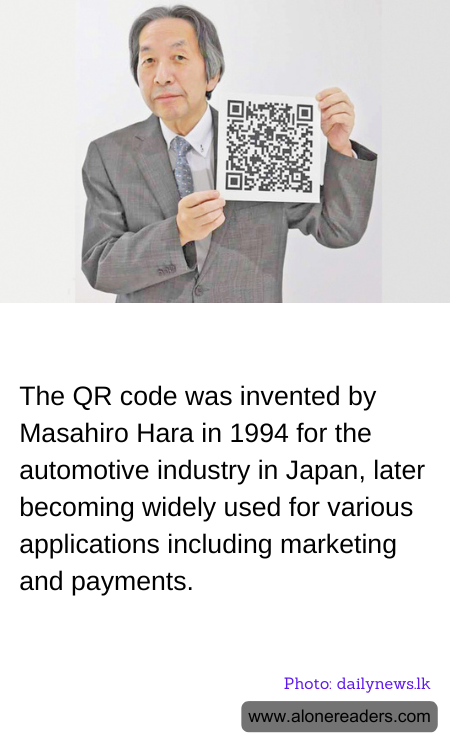
The humble beginnings of the QR code trace back to 1994 when it was developed by Masahiro Hara from the Japanese company Denso Wave, a subsidiary of the Toyota Group. Initially created to track vehicles during manufacturing, the QR code was designed to allow high-speed component scanning, which was essential in the automotive industry. Unlike traditional barcodes which can only hold up to 20 alphanumeric characters, QR codes can hold up to about 7,089 characters. This capacity, combined with its ability to be scanned from any angle, makes the QR code vastly superior for managing complex supply chains.
From its industrial origins, the QR code has evolved into a ubiquitous tool in contemporary digital communication. Its applications now extend far beyond automotive assembly lines, encompassing marketing, payments, and personal identification, among others. In the realm of marketing, QR codes are used on billboards, magazines, web pages, and even television commercials, enabling marketers to provide consumers with instant access to additional online content. This not only enhances user engagement but also provides a way to bridge the gap between physical and digital experiences.
In retail and payments, QR codes have transformed transactions by simplifying processes and enhancing customer convenience. In many Asian countries, QR codes are integral to mobile payment systems, such as WeChat Pay and Alipay, making cashless and cardless transactions a daily reality for millions. During the COVID-19 pandemic, the use of QR codes surged globally as businesses sought contactless methods to engage customers, process payments, and share information—underlining the QR code’s capability to adapt to emergent needs.
Moreover, QR codes play a significant role in health and safety protocols, where they are used to track vaccination records and test results quickly and reliably. The adaptability and ease of use of QR codes ensure that they remain relevant in a world that increasingly values efficiency and contactless interactions.
As technology continues to advance, the potential for QR codes expands. Future applications could include more integrated solutions in smart homes, enhanced security for personal identification, and further innovations in augmented reality, where QR codes might unlock new layers of digital interaction. What began as a simple tool for tracking car parts has indeed become a cornerstone of modern technological convenience.
