More About This Card
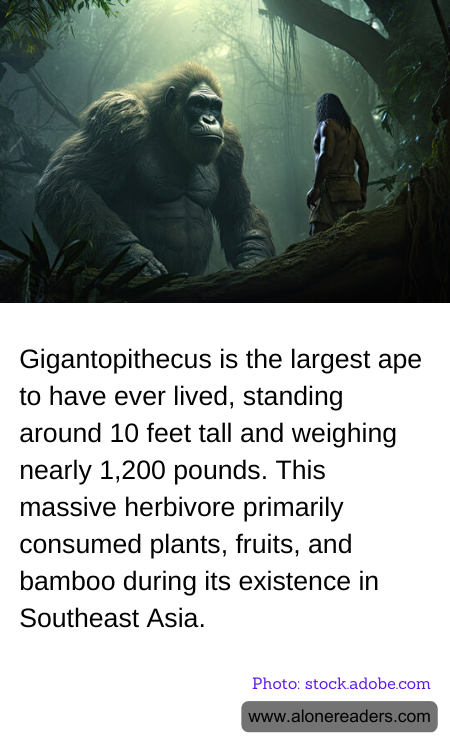
Gigantopithecus, the colossal primate that once roamed the forests of Southeast Asia, is considered the largest ape that ever lived. This giant, albeit extinct, member of the primate family stood an impressive 10 feet tall and weighed close to 1,200 pounds. Their enormous size has intrigued scientists and researchers, offering a fascinating glimpse into prehistoric wildlife and ecological dynamics.
Dwelling in what are now countries like India, China, and Vietnam, Gigantopithecus lived from roughly nine million years ago to as recent as one hundred thousand years ago. The creature’s diet was predominantly vegetarian, with a strong preference for plants, fruits, and particularly bamboo. This dietary preference suggests that Gigantopithecus lived in lush forests where such food sources were abundant. The reliance on bamboo is especially interesting, as it draws parallels with the diet of the modern-day giant panda, which also primarily consumes bamboo.
The exact reasons for the extinction of Gigantopithecus remain a topic of ongoing research and debate. However, it is hypothesized that changes in climate, coupled with the reduction of forests and the resulting scarcity of bamboo, may have played critical roles. As the forests gave way to more open environments, these large apes, with their specialized dietary needs, may have failed to adapt to new available resources, leading to their decline and eventual extinction.
The study of Gigantopithecus not only provides insights into the life forms of prehistoric times but also enhances our understanding of evolutionary biology and the adaptations of species to changing environments. Despite their formidable size and strength, Gigantopithecus reminds us of the vulnerability of species to environmental changes and the impermanence of even the mightiest among creatures. Their story encourages a broader consideration of how current species might be similarly affected by today’s rapidly changing climate and habitat destruction.