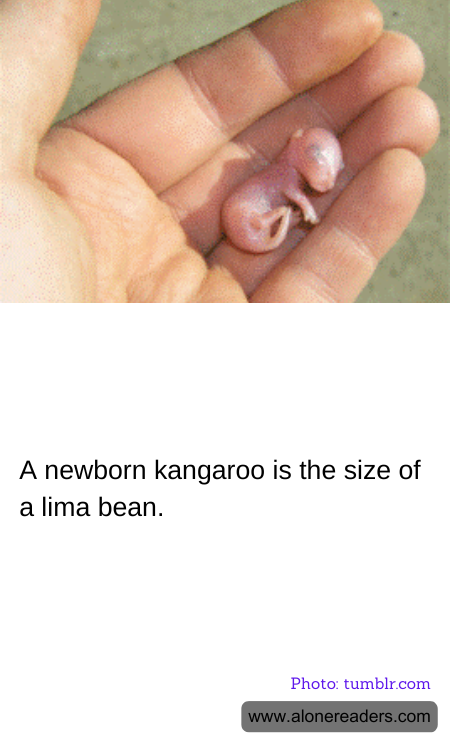
Kangaroos are one of Australia’s most iconic animals, known worldwide for their unique biology and behavior. One of the most fascinating aspects of kangaroos is their reproductive system, particularly how minuscule the newborn is at birth. Remarkably, a newborn kangaroo, or joey, is only about the size of a lima bean when born. This tiny creature, weighing just around one gram, begins a remarkable journey immediately after birth that is a marvel of nature.
The birth process of a kangaroo is quite unusual compared to other mammals. After a gestation period of about 30 to 36 days, the barely-formed joey makes its way from the birth canal to its mother’s pouch. This journey is instinctive and driven by natural impulses. The newborn uses its already developed forelimbs to crawl through the mother’s fur to reach the safety and nourishment of the pouch. This journey is critical and must be completed unaided by the mother, only guided by instinct and the scent of the mother’s pouch.
Once inside the pouch, the joey attaches itself to one of the mother’s four teats, which then swells inside its mouth, securing the joey in place. This is crucial as the pouch will be the joey’s home for up to about six to eight months, depending on the kangaroo species. During its time in the pouch, the joey will undergo significant development, transitioning from a tiny, bean-sized newborn into a more recognizable baby kangaroo. It will develop its eyes, ears, and hind limbs gradually, eventually poking its head from the pouch to observe the world outside before fully venturing out.
The mother kangaroo’s pouch not only provides protection and transportation for the developing joey but also offers the necessary nourishment for growth. The mother can adjust the nutritional content of her milk to meet the changing needs of the growing joey. Remarkably, if a mother kangaroo is nursing two joeys of different ages, she can produce two different types of milk simultaneously to cater to each joey’s specific nutritional requirements.
The size and vulnerability of the newborn kangaroo are key to why the species’ pouch-based development is so extraordinary. This aspect of kangaroo biology showcases an incredible adaptation to ensure the survival of the offspring. This tiny beginning underscores not only the adaptability of kangaroos but also the broader wonders of the natural world, demonstrating yet again how wildlife continues to adapt and thrive in various environments through remarkable biological strategies.
