More About This Card
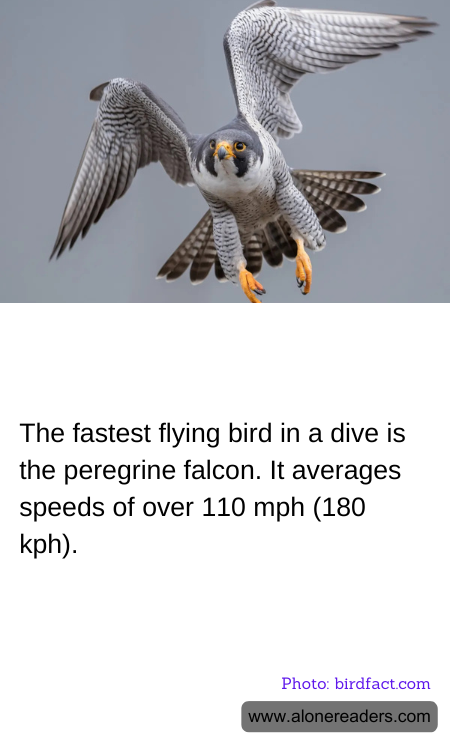
The peregrine falcon, renowned for its astounding speed and precision, reigns as the fastest bird in the world during its hunting dive, known as a stoop. During these dives, it can reach speeds exceeding 110 miles per hour (180 kilometers per hour), with recorded speeds of up to 240 miles per hour (386 kilometers per hour) under optimal conditions. This incredible speed combined with its keen eyesight makes the peregrine falcon a formidable predator in the avian world.
The peregrine falcon's body is perfectly adapted for high-speed pursuits. It has a streamlined body, powerful wings, and a stiff tail that all contribute to its aerodynamic shape, minimizing air resistance. During a stoop, the falcon tucks its wings close to its body, diving headfirst towards its prey with astounding precision and control. The bird's stiff feathers reduce turbulence, enabling smoother and faster flight.
The peregrine's predatory tactics are a spectacle of nature. It typically soars to a great height, then enters a steep dive to strike unsuspecting prey mid-air, often delivering a fatal blow on impact. This hunting strategy is not just a display of speed but also of timing and accuracy, showcasing the falcon's mastery of its aerial environment.
Aside from its speed, the peregrine falcon has a cosmopolitan range, inhabiting diverse environments from Arctic tundras to urban skyscrapers worldwide. This adaptability has allowed them to thrive across various landscapes, although they faced significant threats in the mid-20th century from pesticide exposure. Conservation efforts, including banning harmful pesticides like DDT and implementing breeding programs, have helped their numbers rebound, turning the conservation story of the peregrine falcon into one of hope and success.
The peregrine falcon not only captures our imagination with its sheer speed and agility but also plays a critical role in maintaining the balance of the ecosystems where it thrives. As apex predators, they help control populations of birds and other small animals, which might otherwise reach unsustainable levels. Their presence in diverse habitats highlights the importance of ecosystem health and biodiversity conservation. In recognizing and preserving this remarkable bird, we ensure the continued health of our natural environments.