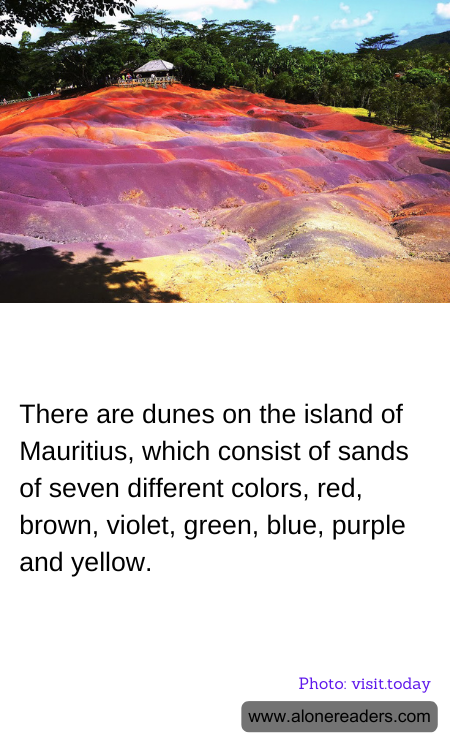
Mauritius, an island known for its stunning white sand beaches and lush sugar cane fields, also hosts one of the world's most captivating geological marvels—the Seven Colored Earths of Chamarel. Located on the southwestern part of the island, this small area of sand dunes comprises sands of seven distinct colors: red, brown, violet, green, blue, purple, and yellow.
This natural phenomenon's origin dates back to the volcanic activity that once shaped the landscape of Mauritius. The different colors of the sand are a result of the cooling at different temperatures of molten volcanic rock. The variation in temperature led to the creation of minerals in the soil that possess distinct colors and contribute to the vibrant appearance of these dunes. Remarkably, despite the tropical rainstorms that Mauritius encounters, these sand dunes never seem to erode, retaining their striking hues year-round.
The Seven Colored Earths have become one of Mauritius' biggest tourist attractions, but the site is not just a photogenic wonder. It is also an intriguing subject for scientific study. Researchers from around the world come to explore its geological formation and the unique conditions that allow the colors in the sand to remain distinct without mixing. The site is carefully preserved, with pathways and viewing platforms constructed to minimize human impact on the natural landscape.
Visitors to the Seven Colored Earths are often amazed by how the colors seem to flow and settle, creating an almost surreal landscape reminiscent of a painting. This spectacular display of nature's palette highlights the intricate and powerful processes of Earth's geological dynamics. It is a poignant reminder of the island's fiery volcanic past, offering an unforgettable spectacle that continues to intrigue and mesmerize those who witness its beauty.
