More About This Card
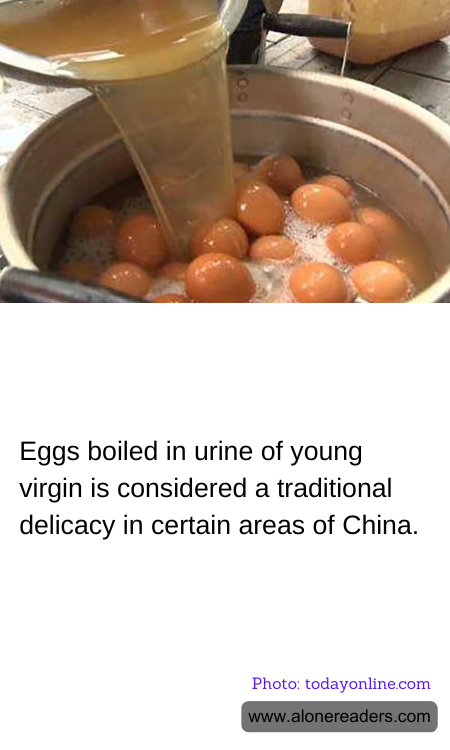
In certain regions of China, particularly in Dongyang, Zhejiang province, there exists a centuries-old culinary tradition that might seem rather unusual to outsiders: eggs boiled in the urine of young boys, specifically those under the age of 10 who have not yet reached puberty. Known locally as "virgin boy eggs," this dish is hailed not only for its unique flavor but also for its purported health benefits.
The process of making virgin boy eggs begins in the spring when the urine of local schoolboys is collected and used as the cooking liquid for the eggs. The eggs are first soaked in the urine, then the mixture is heated until it boils. After reaching a boil, the eggs are removed from their shells and simmered in the same urine for hours, allowing the flavors to infuse. The preparation results in a dish that is said to taste salty and fresh, with some describing a slight aroma of ammonia that is not as unpleasant as one might imagine.
The practice is steeped in traditional Chinese medicine, which often incorporates natural elements thought to promote health benefits. Locals believe that virgin boy eggs can decrease body heat, promote better blood circulation, and invigorate one’s body. They are traditionally consumed during the spring months, which are associated with new beginnings and rejuvenation in Chinese culture.
Despite its deep cultural roots, the practice has encountered its share of controversy and skepticism, particularly among younger generations and health experts. Concerns range from the hygienic aspects of using human waste in cooking to questions about the actual health benefits of the dish. Critics argue that no scientific evidence supports the health claims, and that the practice may pose health risks rather than benefits.
However, for many residents of Dongyang, virgin boy eggs remain a cherished part of their cultural heritage, reflecting age-old beliefs and practices that are integral to their local identity. The dish not only survives as a link to the past but also continues to attract curious tourists eager to experience this unique and puzzling culinary tradition firsthand. Despite varying opinions, it stands as a vivid example of the diverse and sometimes astonishing culinary practices found around the world.