More About This Card
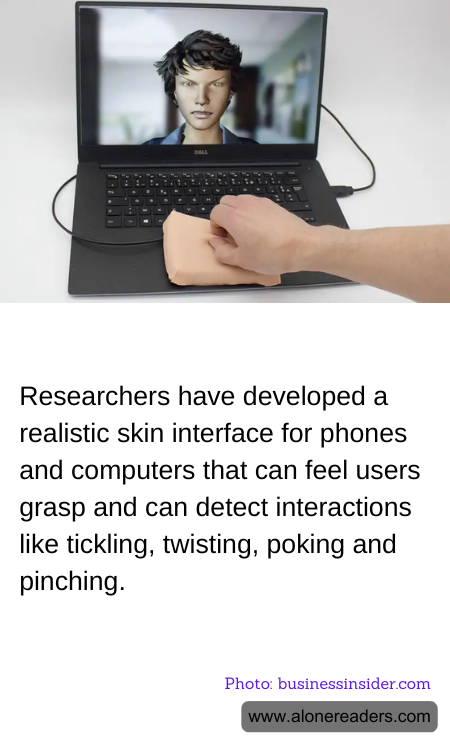
In an innovative leap that blurs the lines between human touch and technology, researchers have successfully developed a skin-like interface that can be incorporated into smartphones and computers, enabling these devices to respond dynamically to human touch. This skin interface isn't just about detecting touch; it's about understanding the nuances of human interaction—such as tickling, twisting, poking, and pinching—much like real human skin does.
The technology uses a layer of artificial skin made from silicone and sensors that mimic the elastic properties and sensory capabilities of human skin. By embedding this material with numerous sensors, the skin interface can detect various forms of physical interaction, thereby providing a unique way for users to interact with their devices. For instance, a pinch could be set to zoom in or out on a digital map, while a tickle could trigger a laughing emoji in a chat app. This opens up new dimensions for developers and designers to create more intuitive and engaging user experiences.
One of the key advantages of this technology lies in its potential to make interactions with digital devices more natural and human-like, which could be particularly beneficial for accessibility. Individuals with disabilities that restrict conventional device use could find new ways to engage with technology, leveraging gestures that are more accommodating to their capabilities. Moreover, it enhances the emotional interaction with devices, paving the way for innovations in gaming, virtual reality, and remote communication where users can feel and convey emotions more vividly through digital mediums.
Another exciting prospect of the skin-like interface is in the realm of robotics and prosthetics. Integrating this technology into robotic systems or prosthetic limbs could result in a more sophisticated sense of touch, enabling robots and prosthetics to perform more complex tasks that require delicate handling or nuanced interactions with human users.
The development of this technology underscores a growing trend in human-computer interaction research focused on making digital experiences more immersive and intuitive. As this technology matures, it could redefine user interface dynamics entirely, moving us towards a future where the line between digital and physical interaction is increasingly seamless. However, it also opens up discussions about the ethical implications and privacy concerns of such deeply integrated technologies that replicate and utilize human-like senses. These are crucial dialogues that will shape how the technology is refined and implemented in the years to come.