More About This Card
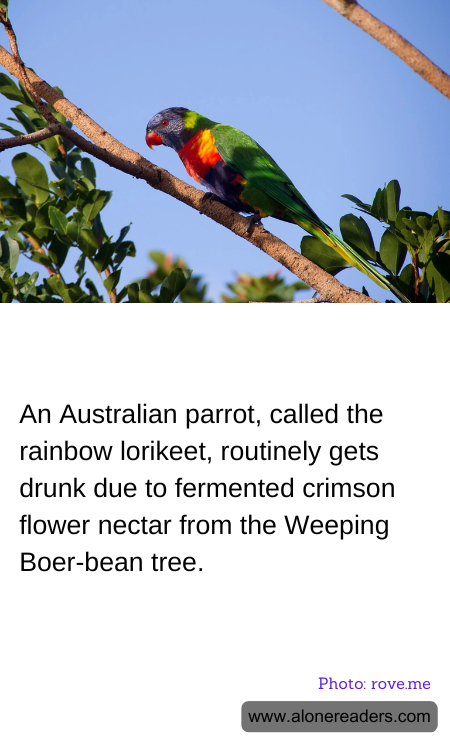
In the vibrant ecosystems of Australia, the rainbow lorikeet, a brilliantly colored parrot, experiences an unusual phenomenon that has piqued the interest of both scientists and bird enthusiasts. These birds occasionally engage in what can only be described as drunken behavior, a direct result of consuming the nectar from the flowers of the Weeping Boer-bean tree, which ferment and produce a natural alcohol. The rainbow lorikeets, known for their striking blue head and belly, green wings, tail, and back, and an orange breast with dashes of red, are normally energetic and acrobatic fliers. However, when they ingest this fermented nectar, they often exhibit disoriented and uncoordinated movements, sometimes even falling from trees due to their impaired state.
This peculiar situation not only highlights intriguing aspects of ecological interactions but also raises concerns about the welfare of these birds. When intoxicated, rainbow lorikeets are at higher risk of predation and may suffer injuries from falls. This behavior has been noted in urban and suburban areas where Weeping Boer-bean trees are common, suggesting that the altered landscape could be influencing this phenomenon by providing abundant sources of the intoxicating nectar.
The consumption of fermented nectar leading to intoxication isn't unique to the lorikeets but is a rare behavioral trait. Researchers studying this oddity aim to understand more about the metabolism of alcohol in wild birds and the potential long-term impacts on the population affected by frequent exposure to alcohol. Additionally, studies look into how changes in natural habitats and urban expansion might be affecting the natural behaviors and diets of wildlife, using the rainbow lorikeets as a case study.
Such occurrences also open up wider discussions about the impact of human development on animal behavior and the unforeseen ways in which wildlife adapts to or suffers from changes in their environment. As curious as it might be to observe these naturally tipsy birds, it's a compelling reminder of the complex and sometimes unexpected connections between flora and fauna in our ecosystems. The case of the rainbow lorikeet provides an intriguing, if somewhat concerning, example of how even slight ecological shifts can significantly impact animal behavior and the balance of local ecosystems.