More About This Card
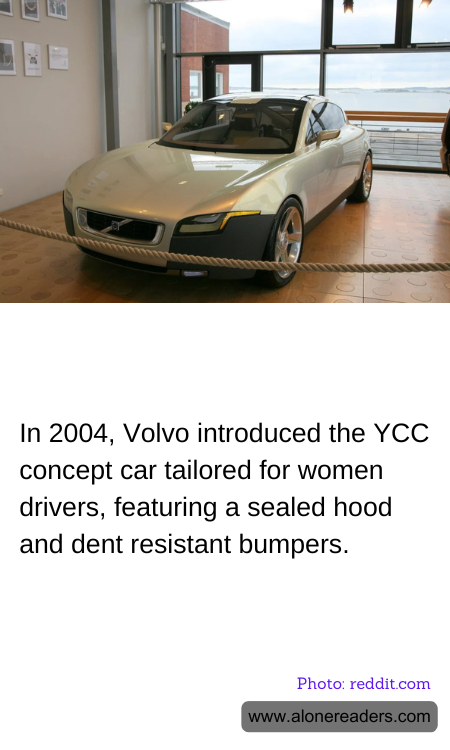
In 2004, Volvo carved a unique niche in the automotive industry with the introduction of the YCC (Your Concept Car), a vehicle explicitly designed with the preferences and needs of women in mind. This groundbreaking move aimed to address and cater to what Volvo identified as a significant but underserved market segment. In designing the YCC, Volvo not only consulted with an all-female team but also conducted extensive global research to understand better what women wanted from a vehicle.
One of the YCC's most notable features was its sealed hood, which meant that drivers did not need to perform basic maintenance tasks such as oil changes and fluid refills. This innovation was introduced to offer convenience and a hassle-free experience, aligning with the findings from research that indicated many women preferred not to engage in vehicle maintenance themselves. Instead, the car was designed so that only professional Volvo mechanics could access the engine bay for scheduled servicing, thereby ensuring professional handling and reducing the frequency and need for maintenance.
Another significant aspect of the YCC was its use of dent-resistant bumpers. This feature was particularly appealing as it minimized damage from minor bumps and scrapes typically occurring in parking lots or during city driving. This practical feature ensured that the car maintained its aesthetic appeal and structural integrity even in the face of minor accidents, thus offering peace of mind to drivers who valued maintaining their vehicle's appearance.
The interior and exterior design of the YCC also reflected a deep understanding of its target audience’s preferences. The car included ergonomic features tailored to women's physiques, such as adjustable pedals and seats that could conveniently accommodate drivers of different statures, ensuring comfort and safety. The vehicle also incorporated smart storage solutions, reflecting the multifunctional use often required of family or professional life, from ample trunk space to innovative compartments for personal belongings.
Volvo's YCC was not just a car; it was a bold statement in an industry often criticized for its generic approach to vehicle design and marketing. Although the YCC remained a concept vehicle and was never released for mass production, it significantly impacted how auto manufacturers viewed the market, encouraging a more nuanced approach to designing cars that cater to diverse client groups' specific needs and preferences. This vehicle remains a notable example of thoughtful design and user-focused innovation in the automotive world.