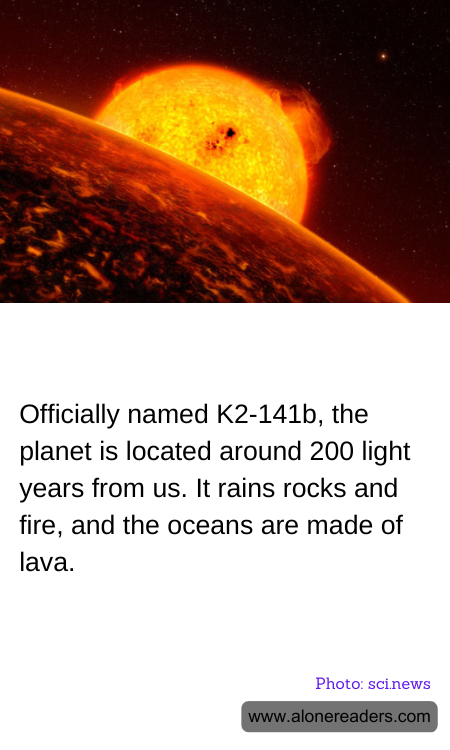
K2-141b, an exoplanet located about 200 light years away from Earth, presents an environment so extreme it sounds almost fantastical. In stark contrast to our blue planet, K2-141b experiences weather that can only be described as otherworldly, with its 'rain' consisting of rocks and an atmosphere blazing with fire. The planet, first detected through the Kepler Space Telescope, belongs to a class known as 'lava planets' or 'ultra-short period planets' which orbit their stars much more closely than even the innermost planets in our solar system.
The atmosphere and environmental conditions on K2-141b are driven by its proximity to its host star. It's so close that temperatures exceed 3000 degrees Celsius - hot enough not only to melt rocks but also to vaporize them, creating an atmosphere that is dominated by rock vapor. This vaporized rock precipitates as rain, only to be molten again once it reaches the surface, leading to rivers and seas of lava. The side of the planet facing its star is a vast ocean of magma, while its dark side can reach temperatures below -200 degrees Celsius, freezing the lava flows into rock.
The extreme conditions on K2-141b are due to its locked position relative to its star. The same side of the planet continually faces the sun which is essentially why temperatures are lethally hot on the one side and frigid on the other. This bizarre day-night cycle contributes to the supersonic winds that transport rock vapor from the scorching day side to the freezing night side, thus creating a cycle of precipitation not unlike Earth's water cycle, but far more intense.
The study of planets like K2-141b not only expands our understanding of the types of planetary bodies that exist but also contributes valuable insights into planetary formation and dynamics. Although inhospitable, such extreme planets challenge our models of atmospheric science and help scientists refine their theories about atmospheres under conditions far different from those on Earth. Observations and studies continue, using both ground-based telescopes and satellite missions like the Hubble Space Telescope, to gather more data on these fascinating worlds and broaden our knowledge of the universe's complexities.
