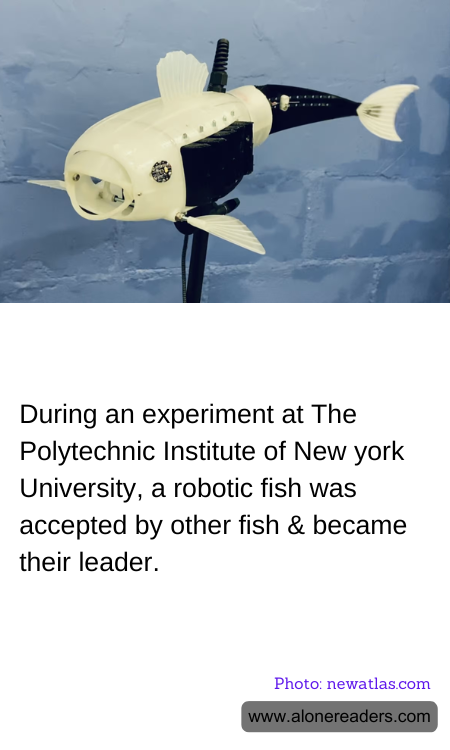
In an intriguing experiment at the Polytechnic Institute of New York University, researchers witnessed a remarkable phenomenon involving robotic integration with biological life forms. A robotic fish, designed to mimic the appearance and movements of a specific fish species, was introduced into an environment with live fish. Surprisingly, not only did the live fish accept the robotic counterpart, but they also began to follow it, effectively making the robot their leader.
This experiment is part of a broader field of research that explores the interaction between robotic devices and natural ecosystems. By designing robots that can seamlessly integrate into wildlife populations, scientists aim to study and monitor animal behaviors and environmental conditions more effectively and non-invasively. This robotic fish, equipped with sensors and cameras, provided valuable data about the fish's behavior, social dynamics, and environmental interactions.
The acceptance of the robotic fish by the live fish could be attributed to the robot's convincing replication of the species' specific visual and movement cues. These robots are typically programmed to emulate the swimming patterns, body movements, and signals of the real fish to a high degree of accuracy. In doing so, they can earn the trust of the animal group. In this case, the live fish not only tolerated the presence of the robotic fish but also started to see it as a leader, following its movements and reacting to its cues.
This leadership behavior observed in the fish opens up fascinating possibilities for wildlife research and conservation. By using such robots, researchers can potentially lead animals away from dangers, such as oil spills or fishing areas, or towards safer habitats. Moreover, studying how animals interact with these robots enhances our understanding of animal behaviors, crucial for the development of conservation strategies.
Additionally, the success of such experiments could pave the way for more advanced robotic applications in environmental monitoring and ecological research. Robots like these could be used to monitor pollution levels, the presence of pathogens, and other critical environmental factors without disturbing the natural habitat.
The experiment at the Polytechnic Institute of New York University not only showcases a technological triumph but also offers a glimpse into the future possibilities of human interaction with the natural world, where robotics could play a pivotal role in the conservation and study of wildlife populations.
