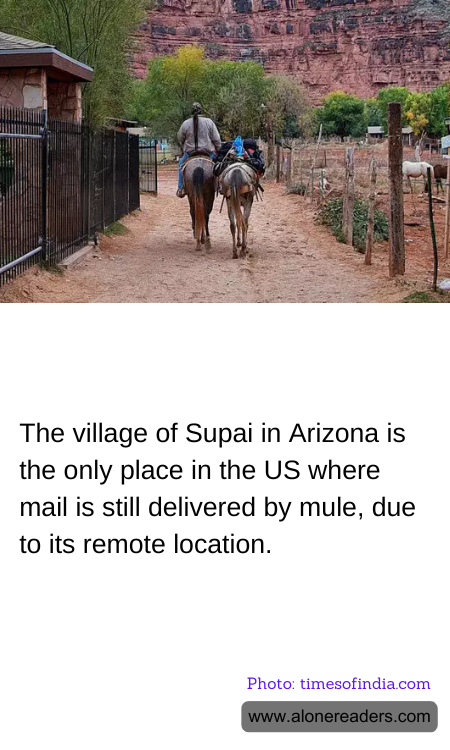
Nestled within the Havasupai Indian Reservation in Arizona, the village of Supai presents a unique blend of ancient culture and modern necessity. Located at the base of the Grand Canyon, Supai is one of the most secluded settlements in the United States, accessible only by foot, horseback, or helicopter. This isolation means that it also boasts a truly unique mail delivery system—the only one in the United States still using mules for transport.
The mule train in Supai travels eight miles from the hilltop to the village, carrying not just mail but also food, supplies, and even furniture. This system dates back over a century, serving as a critical lifeline for the Havasupai Tribe. The tribe, known as the "People of the Blue-Green Waters," lives in deep harmony with this rugged landscape, which features stunning waterfalls and creeks that draw visitors from around the world.
The journey for mail begins at a post office in Peach Springs, Arizona, where it is then transported to the canyon rim. From there, specially trained mules carry the packages and letters down the steep, rocky paths to the village. This mule delivery is not only a quaint reminder of a bygone era but also a testament to the adaptability and perseverance of the Havasupai people. Despite their isolated location, residents of Supai still receive regular postal services, which can be crucial for both communication and provision.
Moreover, the use of mules is an environmentally friendly method of transportation that minimizes the impact on the canyon's delicate ecosystem. Tourists often marvel at this embodiment of tradition and sustainability as they explore the area's breathtaking landscapes. For the Havasupai Tribe and visitors alike, the mule mail delivery continues to be a source of pride and a vital component of daily life in one of the most extraordinary settings in the United States. As technology advances and societies evolve, the mule trains of Supai serve as a profound reminder of the importance of preserving cultural heritage and adapting to the demands of the environment.
