More About This Card
In the realm of green aviation, Cochin International Airport in Kerala, India holds the distinction of being the world’s first fully solar-powered airport. This pioneering project began in 2015 when the airport authorities installed a solar power plant on the premises. The move towards renewable energy came as a strategic response to high electricity costs, as well as an environmental commitment to reduce carbon emissions.
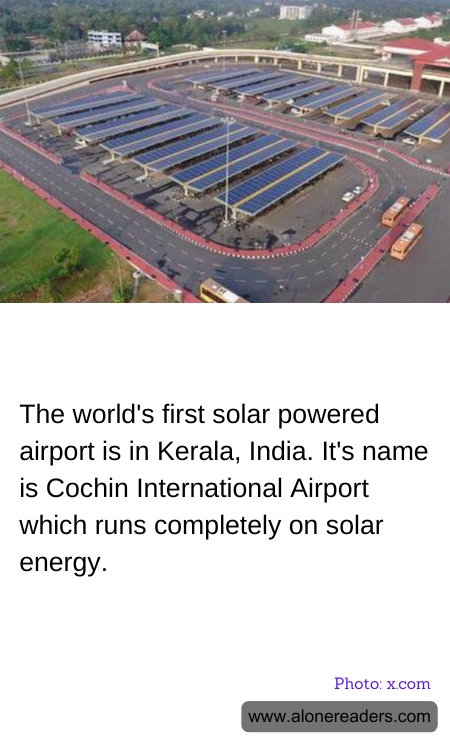
Cochin International Airport’s investment in a 12-megawatt solar power array has been expanded over the years. Today, it includes more than 46,150 solar panels laid across 45 acres. These panels are not only limited to one area; they cover the cargo complex, car park, and other regions around the terminal, making full use of available space while driving sustainability.
This solar initiative generates approximately 50,000 to 60,000 units of electricity per day, which is sufficient to meet the airport's total power requirements. Any excess generated power is fed back into the state’s power grid, underlining the airport’s role as a net energy positive establishment. This achievement is pivotal not only in terms of environmental conservation but also in economic terms, saving on high electricity expenses which traditionally form a significant part of an airport's operational costs.
The switch to solar energy at Cochin International Airport has led to the offsetting of more than 300,000 metric tons of carbon emissions, equivalent to planting as many as three million trees. Such a feat is exemplary in illustrating how infrastructural developments, often seen as ecologically detrimental, can pioneer in ecological conservation. This initiative has sparked interest globally, with several other airports now looking to adopt similar measures in renewable energy use.
Moreover, the success story of Cochin International Airport underscores the potential for large-scale solar power use in other sectors and industries worldwide. It showcases a sustainable pathway that other large institutions might follow, emphasizing that economic and environmental objectives need not be at odds in contemporary development narratives.