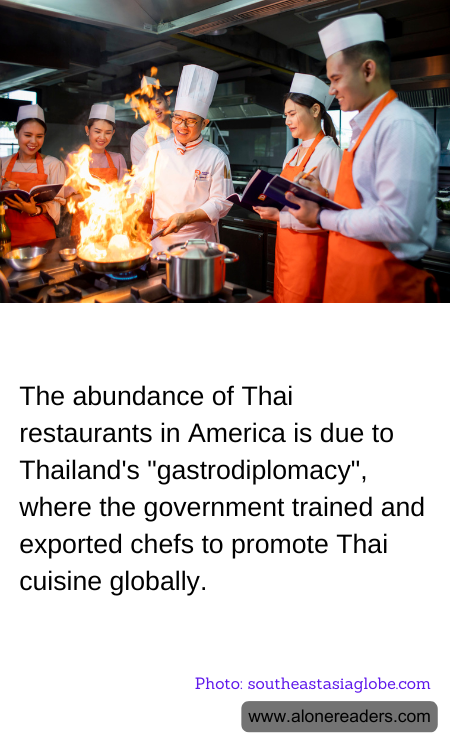
The prevalence of Thai restaurants across the United States is a fascinating example of how culinary culture can be intentionally spread as a form of soft power, often referred to as "gastrodiplomacy." This term describes a diplomatic strategy aimed at enhancing a nation's cultural influence through its cuisine. Thailand has been particularly adept at implementing this strategy, with the Thai government actively promoting its cuisine globally as a part of national policy.
The Thai government began this initiative in the early 2000s when they launched the "Global Thai" program. The objective was clear: to increase the number of Thai restaurants worldwide, thereby expanding international appreciation for Thai culture and boosting tourism to Thailand. To achieve this, the Thai government not only facilitated the training of chefs in the intricacies of Thai cooking but also helped fund Thai restaurants abroad. This endeavor included creating culinary scholarships and supporting Thai entrepreneurs with logistical and financial assistance to set up their establishments overseas.
The impact of these efforts has been profound in America and beyond. The sharp rise in Thai restaurants has introduced a wide audience to the flavors of Thailand, from the spicy kick of Tom Yum soup to the comforting taste of Pad Thai. The strategy not only expanded the global reach of Thai cuisine but also established Thailand's culinary reputation, enhancing its cultural cachet and inviting interest in other aspects of Thai culture and tourism.
Furthermore, the success of gastrodiplomacy in promoting Thai cuisine has encouraged other countries to adopt similar strategies. South Korea and Peru, for example, have also embarked on culinary diplomacy missions, promoting national dishes like kimchi and ceviche, respectively, to foster a greater global appreciation of their cultures.
This culinary diplomacy also has an economic dimension. By increasing the demand for Thai ingredients, such as lemongrass, galangal, and Thai basil, the global spread of Thai restaurants has helped stimulate Thailand's agriculture, generate exports, and create jobs both domestically and abroad. As Thai restaurants flourish, they contribute to a complex interplay of cultural exchange, economic growth, and diplomatic goodwill, illustrating how cuisine can transcend national boundaries and become a shared global heritage.
