More About This Card
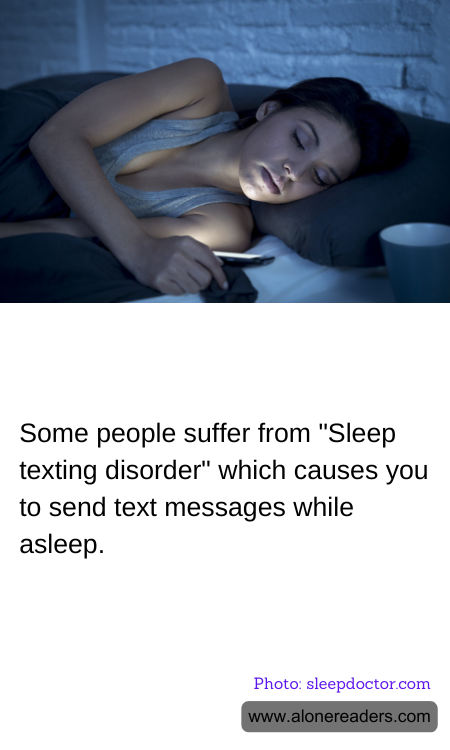
In an age where digital communication is ubiquitous, a peculiar phenomenon known as "sleep texting disorder" has emerged, affecting a segment of the population that remains tethered to their electronic devices even during sleep. This condition involves an individual sending text messages while they are asleep, often with little to no recollection of the activity upon waking. The disorder is a modern manifestation of parasomnia, a category of sleep disorders that entail abnormal movements, behaviors, emotions, and perceptions that occur while falling asleep, sleeping, or waking up.
Sleep texting typically happens during the transition between sleep stages, in a state where the person is half-asleep and half-awake, known as the hypnagogic state. During this state, a person can perform routine tasks, such as texting, which are usually done during wakefulness. The content of these messages can range from coherent and contextually appropriate to completely nonsensical.
The rise in sleep texting is believed to be strongly linked to the prevalence of smartphone use and the habit of keeping these devices in close proximity during sleep hours. Notifications or the habit of checking messages can prompt semi-conscious responses from individuals who are otherwise deeply asleep. Over time, this can disrupt sleep patterns, leading to poor sleep quality and decreased daytime functioning.
This modern disorder not only highlights the intrusion of digital habits into the private sphere of sleep but also raises concerns about privacy and the potential for miscommunication. People might inadvertently send inappropriate or sensitive information, without any awareness of doing so, which can lead to embarrassing or damaging situations.
Addressing sleep texting involves a few practical steps. Experts recommend establishing a clear boundary between technology use and sleep. This can involve setting a specific time at night after which digital devices should be turned off or switched to "do not disturb" mode. Physically removing devices from the bedroom can also prevent sleep texting by eliminating the possibility of easy access during half-conscious states. Moreover, maintaining a regular sleep schedule and creating an environment conducive to sleep, such as keeping the bedroom dark and quiet, will not only help curb sleep texting but also contribute to overall better sleep quality.
As we continue to navigate life with technology, sleep texting serves as a reminder of the need to create boundaries for our digital habits, particularly concerning our most vulnerable states such as sleep. While it may seem trivial or humorous on the surface, sleep texting is a signifier of our deep entanglement with our devices, urging a reevaluation of our technology usage in relation to our health and well-being.