More About This Card
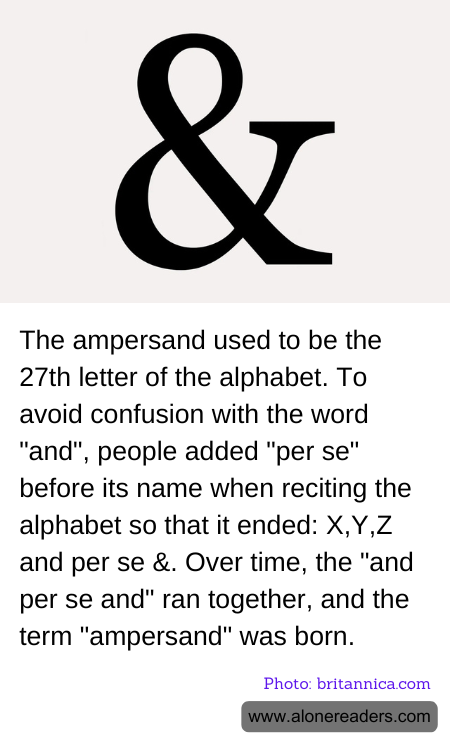
The ampersand, known today as the symbol "&", boasts a fascinating history intertwined with the English alphabet itself, where it was once considered the 27th letter. The journey of the ampersand dates back to the 1st century AD, originating from the Latin word "et" which means "and". This ligature evolved over centuries, finding its distinct form that merged the e and t together into the recognizable symbol we use today.
In the early days of the English alphabet, the ampersand was recited as part of the alphabet. It was typically appended at the end following Z. However, to differentiate it from the word "and", speakers would add "per se" (Latin for "by itself") when mentioning the ampersand. This practice was meant to signify that the ampersand was indeed a standalone entity and not merely a conjunction. Thus, when the alphabet was recited, it would conclude with "X, Y, Z, and per se &," emphasizing the distinct role of the ampersand as an independent character.
Over time, this phrase "and per se and" was slurred together in speech, gradually morphing into the word "ampersand". The term first appeared in dictionaries in the early 19th century and has since been the formal term used to refer to the "&" symbol. The colloquial and even educational recitation faded away, leaving the ampersand out of the modern English alphabet, but its legacy as a former letter still intrigues historians and linguists.
While no longer officially part of the alphabet, the ampersand remains a useful and often stylistic element in modern writing, particularly in company names, stylized text, and shorthand notations. Its history is a reminder of the fluidity of language and the evolution of writing systems, preserving a piece of linguistic heritage in a seemingly simple symbol.