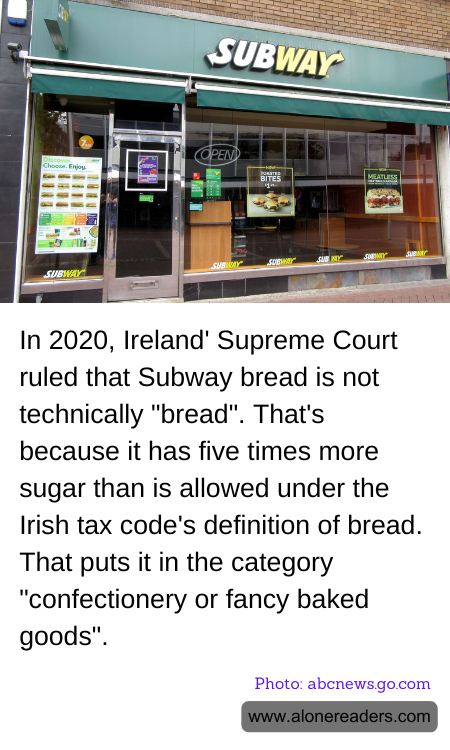
In a surprising turn of events in 2020, the Supreme Court of Ireland delivered a ruling that Subway's bread could not legally be considered "bread" under its tax laws. The case emerged from a broader tax dispute, focusing on whether Subway could categorize its bread as a staple food, which would exempt it from value-added tax (VAT). According to the Irish Value-Added Tax Act of 1972, staple foods like bread are taxed at 0%, but they must adhere to specific compositional standards to qualify.
The crux of the issue lay in the sugar content of Subway's bread. The law stipulates that for bread to be taxed at the 0% rate, the weight of sugar and fat in the bread must not exceed 2% of the total weight of flour used in the dough. Subway's bread, however, contains about 10% sugar relative to the weight of the flour, a figure that far exceeds the limit. This sugar content technically places Subway's bread in the same category as pastries and other "fancy baked goods," which are taxed at a higher rate.
The ruling had far-reaching implications, inciting discussions about food labeling, nutrition, and taxation policies. Critics of the decision argued that it could undermine the public's understanding of what constitutes a healthy staple food, while others applauded the strict adherence to nutritional standards in legislative policies. Furthermore, the judgement prompted a reevaluation of food taxation policies, highlighting the need for clarity and updating to reflect contemporary nutritional guidelines and public health objectives.
For Subway, known globally for its sandwiches, the ruling was more than a local tax issue; it highlighted the broader challenges food companies face in navigating international food regulations. The decision also sparked debate among consumers and nutrition experts about the ingredients in processed foods, emphasizing the need for greater transparency and awareness in food labeling to enable healthier food choices. As the dust settles, the long-term effects of this ruling, both in Ireland and globally, are likely to influence not just tax laws but also how food products are marketed and perceived by consumers worldwide.
