More About This Card
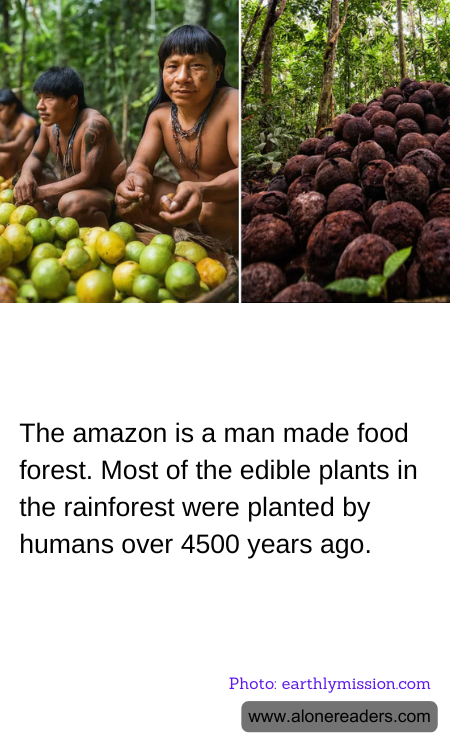
The Amazon Rainforest, often referred to as the lungs of the Earth for its vast capacity to produce oxygen, is not only a natural biodiversity hotspot but also a canvas of ancient human ingenuity. Recent research has suggested that what was once believed to be a wild, untamed wilderness may actually be a highly modified food forest, shaped by human hands more than 4500 years ago.
This perspective challenges the traditional view of indigenous peoples as primitive hunter-gatherers with minimal impact on their environment. Instead, it posits that these early societies were sophisticated enough to engineer ecosystems on a grand scale. Archaeological evidence indicates that the extensive biodiversity found in the Amazon is largely due to deliberate planting and cultivation of edible plants by ancient civilizations. This form of ancient agroforestry, known as terra preta (black earth), involved the creation of rich, fertile soil made from a mixture of charcoal, bone, and manure. This soil not only enhanced crop yields but also sequestered carbon, contributing to climate control.
Fruits like açaí, Brazil nuts, and rubber were some of the many staples that were possibly cultivated, which helped sustain large populations and complex societies. These societies managed the forest in a sustainable manner that maintained its diversity while supporting its inhabitants. The theory further serves as a testament to the fact that the indigenous knowledge of flora and fauna is vast and complex, suggesting profound implications for contemporary conservation and agricultural practices.
Moreover, the idea of the Amazon as a "built environment" underscores the argument that human beings do not always act as agents of ecological disruption but can also be creators of ecological harmony when they align their practices with the principles of conservation and sustainability. This ancient wisdom, proven by centuries of practice before the arrival of Europeans, highlights a potential path forward in modern efforts to manage the Amazon sustainably.
Understanding the Amazon as a managed landscape constructed by sophisticated agrarian societies gives us a richer, more nuanced appreciation of this incredible ecosystem. It serves as a reminder of how human survival can be deeply intertwined with the natural world, guided by the principles of stewardship and sustainability.