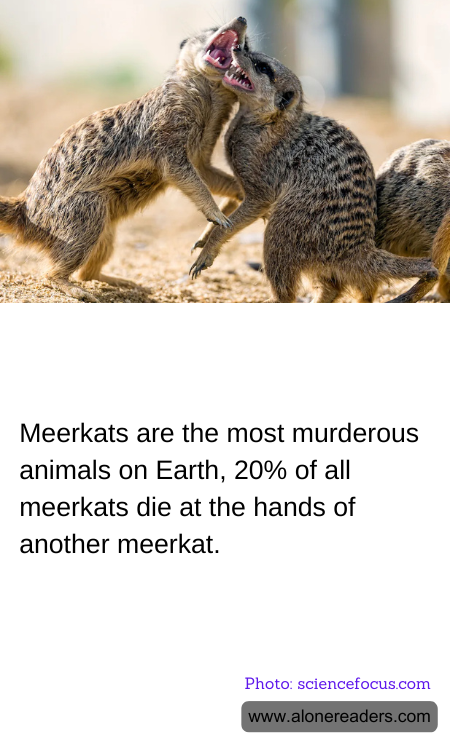
Meerkats, known for their cute and social nature, hold a surprisingly dark record among mammals for their intraspecific aggression. Studies reveal that meerkats exhibit one of the highest levels of violence towards their own kind, with about 20% of meerkat deaths attributed to attacks by other meerkats. This astonishing statistic places them at the top of the list when it comes to murderous behavior within a species.
The reasons behind this high level of aggression are deeply rooted in the social structure and environmental pressures faced by meerkats. These small mammals live in highly organized groups, known as mobs or gangs, which can range from a few individuals to over two dozen. Each group is led by a dominant pair, with a clearly established hierarchy that dictates breeding and foraging rights.
This hierarchy is a major source of internal conflict, particularly among females. Female meerkats often engage in aggressive acts including infanticide and violent takeovers, aiming to ascend in rank and secure the best possible conditions for their own offspring. Lower-ranking females who challenge this authority or are perceived as a threat to the dominant female's pups can become targets of lethal attacks.
Moreover, living in the harsh environments of the African deserts, resources such as food, water, and shelter are in limited supply, which exacerbates the competition within groups. The struggle for survival not only influences their predatory behaviors but also their interactions with each other, often leading to fatal outcomes.
This intense level of intraspecific aggression is notable from an evolutionary perspective as it underscores the intensity of natural selection pressures meerkats face. The brutal reality is that these behaviors, although shocking, can be advantageous in terms of evolutionary fitness. By eliminating competition, the dominant individuals ensure more resources and reproductive opportunities for themselves and their offspring, thereby potentially enhancing their genetic contribution to future generations.
Despite their ruthless side, meerkats are incredibly cooperative and exhibit a range of complex social behaviors. They take turns acting as sentinels to warn of predators, cooperatively care for the offspring of others in their group, and work together to defend their territories. The stark contrast between their violent interrelations and their cooperative societal structure makes meerkats a particularly fascinating subject for biologists and animal behaviorists studying the dynamics of social animals.
