More About This Card
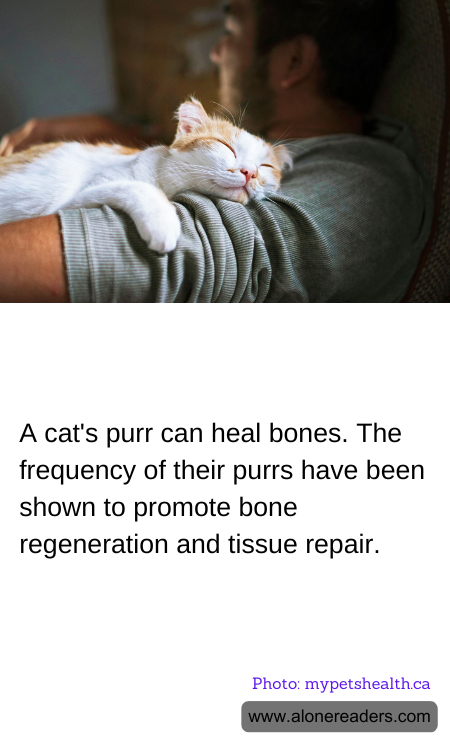
Cats are not only beloved pets but also intriguing creatures for their unique behaviors and abilities. Among these is the phenomenon of purring, a characteristic sound that has fascinated both pet owners and scientists alike. Beyond providing a sense of comfort and signaling contentment, studies suggest there is more to a cat’s purr, particularly its potential effects on healing.
The comforting purr of a cat typically ranges in frequency from 20 to 140 Hertz. Interestingly, these vibrations have been linked to therapeutic benefits not just for their feline producers but also for humans. Research indicates that frequencies within the range of 25 to 50 Hertz are capable of promoting bone density and strength. This range matches closely with the low end of a cat's purring frequency, thereby supporting the idea that these vibrations can aid in healing bones. It is hypothesized that the specific frequency of vibrations produced in a cat’s purr can help accelerate the regeneration process of bones and even promote tissue repair.
This capability likely evolved as a survival mechanism. For sedentary animals, maintaining bone and tissue health is crucial, and the natural act of purring could help in repairing bones and tissues without much physical activity. Cats often purr when they are content, but also when they are injured or stressed, which could further be an instinctive response to help heal themselves.
For humans, exposure to these vibrations could be beneficial too. Recovery periods might be shortened and conditions such as osteoporosis could potentially be managed more effectively with vibration therapy mimicking a cat’s purr. Some medical treatments and devices already employ the use of controlled vibrational frequencies to promote bone health and recovery, illustrating a case of bioinspiration where learning from nature influences practical medical solutions.
Nevertheless, while these findings are promising, they still necessitate further extensive research to conclusively determine the effectiveness and practical applications of this therapy. Ensuring the right frequency, amplitude, and duration are critical factors that need to be optimized to reproduce the natural healing effect of a cat's purr through therapeutic means.
Therefore, while your domestic cat’s purr might be more beneficial than just a heartwarming sound, definitively relying on it for medical recovery purposes should come with caution until more concrete scientific evidence is available. Thus, while cuddling up with your purring kitty is undoubtedly soothing, the full scope of benefits remains a fascinating subject for further scientific inquiry.