More About This Card
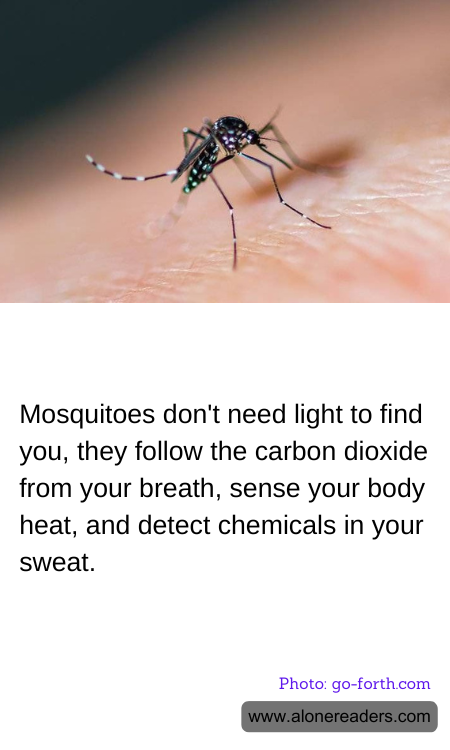
Mosquitoes are incredibly adept at tracking down their next meal, and contrary to popular belief, they don't rely on light to find their way to humans. Instead, these pesky insects use a highly developed sensory mechanism that allows them to hone in on their targets through a combination of cues emanating from our bodies. At the forefront of these mechanisms is their ability to detect carbon dioxide. Every time we exhale, we release carbon dioxide into the air. Mosquitoes have specialized receptors in a structure called the maxillary palp that are incredibly sensitive to the carbon dioxide present in our breath, allowing them to detect our presence from a considerable distance.
In addition to carbon dioxide, mosquitoes are attracted to the body heat emitted by humans. Their thermal receptors, located near the antennae, are finely tuned to sense the temperature changes in the environment, guiding them towards the warmth of a human body. This thermal sense is particularly acute in some mosquito species that are notorious for transmitting diseases.
Moreover, mosquitoes can also detect various substances in human sweat, such as lactic acid, ammonia, and other volatile compounds. The presence of these chemicals can vary depending on one’s genetic makeup, diet, or even the amount of exercise one has done, thereby affecting their attractiveness to mosquitoes. Research suggests that certain chemicals in sweat can make individuals more appealing to these insects, thus increasing their chances of being bitten.
Understanding these sensory capabilities of mosquitoes not only highlights the sophistication of these common pests but also aids in developing better methods of mosquito control. By disrupting their CO2 detection pathways or masking the chemical signatures humans emit, scientists are working on more targeted ways to keep mosquitoes at bay, potentially reducing the spread of mosquito-borne diseases such as malaria, Zika, and dengue. Thus, although mosquitoes’ adeptness at finding humans can seem almost uncanny, it is rooted in a complex interplay of biological sensors finely tuned through evolution to ensure their survival.