More About This Card
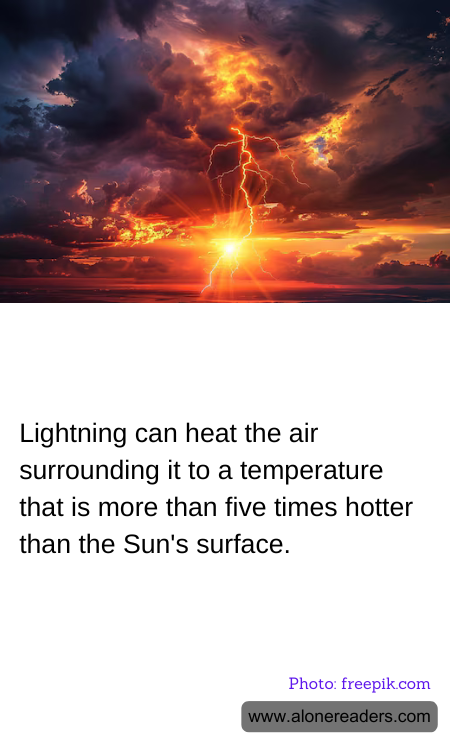
Lightning is one of nature's most powerful and awe-inspiring phenomena. Each bolt unleashes a vast amount of energy, capable of heating the air around it to temperatures exceeding 50,000 degrees Fahrenheit (about 28,000 degrees Celsius). This is more than five times hotter than the surface of the Sun, which reaches temperatures around 10,000 degrees Fahrenheit (approximately 5,500 degrees Celsius).
The mechanism behind this intense heating involves the rapid movement of electric charges. When a lightning bolt travels from a cloud to the ground, it actually opens a small, temporary channel through the air. As the electric current, consisting of electrons, surges through this path, it meets with resistance from the air molecules, which include nitrogen and oxygen. This resistance causes the air to heat up explosively, creating a shockwave that we hear as thunder.
The extreme heat causes the air to expand rapidly, which can lead to the rapid compression of molecules in nearby air, causing more heat. Although this intense temperature exists very briefly and very locally around the channel formed by the lightning bolt, it is enough to cause the surrounding air to glow, creating the brilliant flash that we see.
Understanding the dynamics of lightning is crucial for multiple fields, from meteorology and environmental science to safety and engineering. For instance, this knowledge helps improve the design of buildings and infrastructure to withstand and safely channel the energy of strikes. It also plays a role in advancing our understanding of the natural electricity in Earth's atmosphere and its impact on weather patterns and climate.
The fact that such common earthly events can reach temperatures much hotter than the surface of the Sun highlights both the power of the natural world and the importance of studying and respecting our environment. As climate change potentially increases the frequency and intensity of thunderstorms, comprehending and predicting lightning will be even more critical in safeguarding people and property in the future.