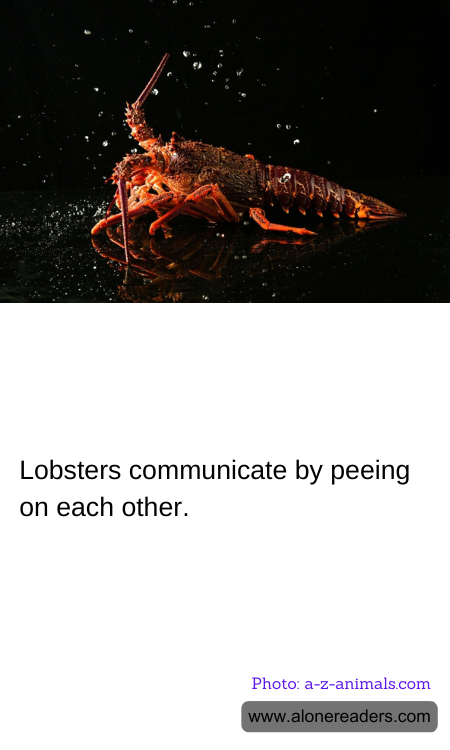
Communication among animals takes on various fascinating forms across the species spectrum, from the songs of birds to the dances of bees, showing us just how complex nature can be. A particularly intriguing form of interaction occurs among lobsters. These ocean dwellers have a unique approach to communication: they use urine.
Lobsters have specialized urine-release nozzles on their faces, located just beneath their eyes. These nozzles direct streams of urine forward into the face of their intended recipient. When lobsters communicate, they do so by ejecting streams of urine at each other. This method of communication is vital in a variety of social interactions among lobsters, from mating rituals to establishing dominance.
The urine of a lobster is not merely waste but a complex cocktail of chemicals that can convey important messages. These chemical signals can indicate a lobster’s readiness to mate, its health status, and even its individual identity. During mating seasons, male lobsters may use their urine to inform females of their presence and readiness to mate, while females can indicate their receptiveness. This urine-based communication allows lobsters to engage each other without direct physical contact, which is crucial in avoiding unnecessary fights in the often-competitive ocean environment.
Furthermore, dominance hierarchies among lobsters can be influenced by these urinary signals. More dominant lobsters will frequently use urine signals to assert their status to smaller or less dominant counterparts, effectively maintaining order within their community without resorting to physical aggression. This sort of communication is especially pronounced in the confined spaces of a lobster trap, where they are unable to escape each other’s signals.
Moreover, lobsters are also known to recognize and remember the urine smell of other lobsters. This olfactory memory helps sustain social hierarchies and reduces the frequency of conflicts among the crustaceans. Research in this area provides fascinating insights into the complex layers of communication and social organization in marine life, illustrating that even seemingly simple creatures like lobsters have developed highly specialized and effective means of interaction. Thus, lobsters remind us that communication in the animal kingdom can be as unique and varied as the species themselves.
