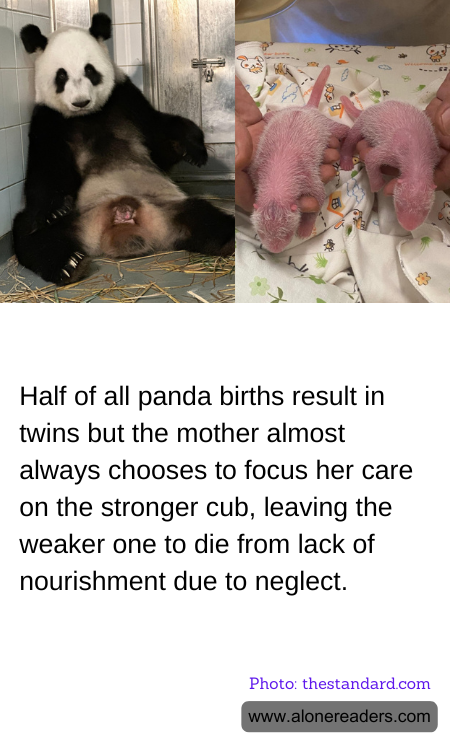
In the natural world, the survival strategies of species often reflect a harsh reality shaped by environmental pressures and biological necessities. This is particularly evident in the reproduction strategy of the giant panda. Notably, half of all panda births result in twins, an intriguing phenomenon with a somber twist. When panda twins are born, the mother panda exhibits a behavior that underscores nature’s intrinsic inclination towards survival of the fittest; she generally chooses to nurture only the stronger cub, neglecting the weaker one.
This seemingly callous behavior is, however, rooted deeply in the ecological and physiological challenges pandas face. Pandas generally have very low energy levels due to their nutritionally poor, bamboo-heavy diet, which barely meets their energy needs. Nursing one cub requires a mother to have adequate sustainment, and the effort of rearing two could deplete her own reserves dangerously, potentially endangering both her life and that of the cubs. Therefore, by focusing her limited resources and energy on the cub that has the best chance of survival, the mother maximizes the likelihood of her genetic lineage being passed on to the next generation.
This natural selection process, while brutal, illustrates the sacrifices and instinctual decisions animals must make in the wild to ensure the propagation of their species under challenging environmental conditions. In captive environments like zoos, where both panda twins can be equally cared for, mortality rates are significantly lower, demonstrating how slight shifts in external conditions can impact species behaviors and survival outcomes.
Efforts such as those by conservation programs and breeding centers, which often intervene to hand-raise the neglected cub in a practice known as "twin-swapping," have helped to improve survival rates among twin panda births. Such conservation strategies not only help increase the population of this endangered species but also shed light on the complexity and adaptability of animal behaviors in response to ecological pressures.
