More About This Card
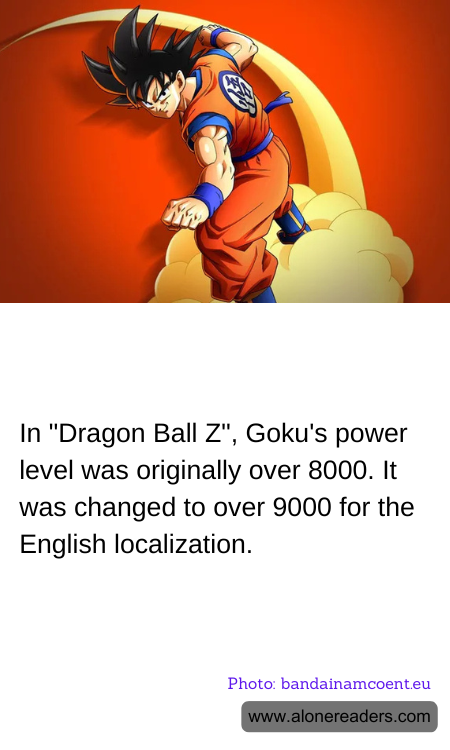
In the realm of "Dragon Ball Z," a Japanese anime series that has captured the imagination of audiences worldwide, one of the most iconic phrases involves the power level of Goku, the protagonist. This phrase highlights the immense capabilities of Goku and serves to emphasize the dramatic escalation of power that characters in the series often undergo. Originally, in the Japanese version of "Dragon Ball Z," during a pivotal scene where Goku’s power is being measured against his formidable foes, his power level is stated to be "over 8000." This moment occurs when Piccolo, Goku’s ally, and Vegeta, one of the antagonists, are shocked by the reading of Goku's power on a scouter, a device used in the series to measure the strength of a warrior.
However, when the series was localized for English-speaking audiences, Goku's famous power level was adapted to "over 9000." This change, though seemingly minor in numerical value, significantly impacted the popularity of the series. The phrase "It’s over 9000!" became a viral sensation, spawning countless memes and being incorporated into popular culture as a way to denote something that exceeds normal expectations or limits.
This alteration was likely due to factors in the translation and dubbing process, where adjustments are sometimes made to fit the pacing, lip-syncing, or to enhance the dramatic effect of dialogue in the translated language. Whatever the reasoning, this change undeniably carved itself into the memories of fans and became one of the most memorable and frequently quoted lines from the franchise.
The power level alteration from 8000 to 9000 is a prime example of how small changes in the localization process of media can lead to significant cultural impact beyond the original content. It reflects both the challenges and creative liberties involved in bringing a story from one linguistic and cultural context to another, while also showcasing how iconic elements of a franchise can come to define it in the minds of its audience.