More About This Card
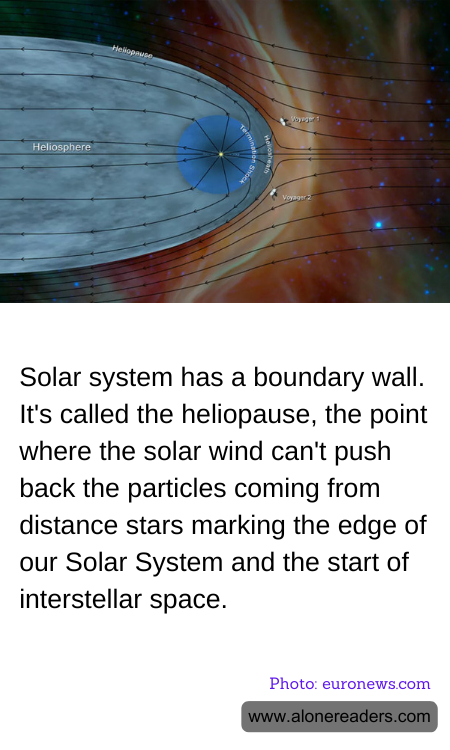
The heliopause represents the outermost boundary of our solar system and is a pivotal frontier in the field of space exploration and astrophysics. It is essentially the point at which the solar wind—a stream of charged particles released from the upper atmosphere of the sun—no longer has enough strength to push against the interstellar medium. This solar wind extends well beyond the planets and forms what is known as the heliosphere, a vast bubble that envelopes the planets and protects them from galactic cosmic radiation.
At the heliopause, the pressure from the solar wind balances with the pressure from the particles in interstellar space. This boundary is not a fixed physical barrier but rather a dynamic, fluctuating frontier that changes in response to variations in solar wind conditions. The distance of the heliopause from the sun varies; however, it is generally thought to be about 120 astronomical units (AU) from the sun. This estimation comes from data gathered by spacecraft such as Voyager 1 and Voyager 2, which have both crossed the heliopause, entering interstellar space in 2012 and 2018, respectively.
The significance of the heliopause extends beyond its definition as a boundary. It marks the region where the sun's influence wanes and where interstellar space begins. The study of this distant region helps scientists understand the nature of the boundaries that separate different astrophysical environments. It provides insights into how solar and galactic phenomena interact and influence each other.
Moreover, the heliopause plays a crucial role in shielding our solar system from high-energy cosmic rays originating outside the galaxy. This natural barrier modulates the entry of these potentially harmful particles, which can affect satellite operations, astronaut safety, and possibly even climate on Earth. Understanding how the heliopause functions and responds to solar activity could prove essential in future deep space exploration missions, potentially aiding in the development of better protective measures for spacecraft and astronauts venturing beyond this boundary.
In summary, the heliopause is not just an astronomical curiosity but a critical region of space that marks the end of our sun’s reach and the beginning of the vast, unexplored expanse of interstellar space. As such, it continues to be a focus of intense study and interest, holding keys to deeper understanding of our universe and our place within it.