More About This Card
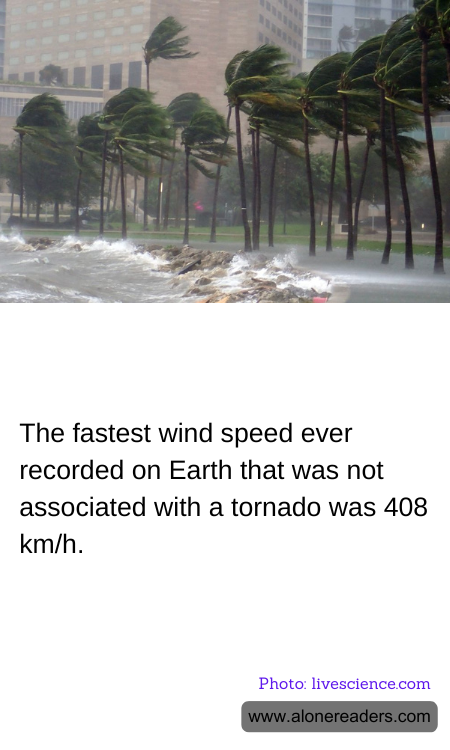
Extreme weather events often fascinate and terrify in equal measure, serving as potent reminders of nature’s power. Among these, the record for the fastest wind speed ever recorded on Earth outside of a tornado stands as a particularly awe-inspiring example. This remarkable event occurred at Barrow Island, Australia, during Cyclone Olivia on April 10, 1996. The wind gust was recorded at an astonishing speed of 408 kilometers per hour (253 miles per hour).
Such powerful winds surpass most of the wind speeds recorded in even the most devastating hurricanes or typhoons typically experienced elsewhere. This record-breaking gust was measured by an automated weather station which was, fortuitously, installed as part of the equipment monitoring operations in oil fields on the island. The fact that these speeds were not linked to a tornado, which are usually more localized and more transient, adds to the uniqueness of this record.
The 408 km/h gust beat the previous record held by Mount Washington, New Hampshire, USA, where winds reached 372 kilometers per hour (231 miles per hour) in 1934. The Mount Washington Observatory had held onto this record for over 60 years, a testament to the unusual nature of the 1996 event at Barrow Island.
Records like these are crucial for meteorological science, providing data that can help refine models for weather prediction and increase our understanding of how extreme conditions can arise. They also highlight the need for robust infrastructure and preparedness systems in areas prone to extreme weather, to protect communities and minimize damage.
Importantly, while these records are fascinating, they also hint at the potential changes in weather patterns that could result from shifts in the planet's climate system. Studying events such as the Cyclone Olivia wind record can help scientists predict and mitigate the impacts of similar events in the future, which may become more frequent or intense due to climate change.