More About This Card
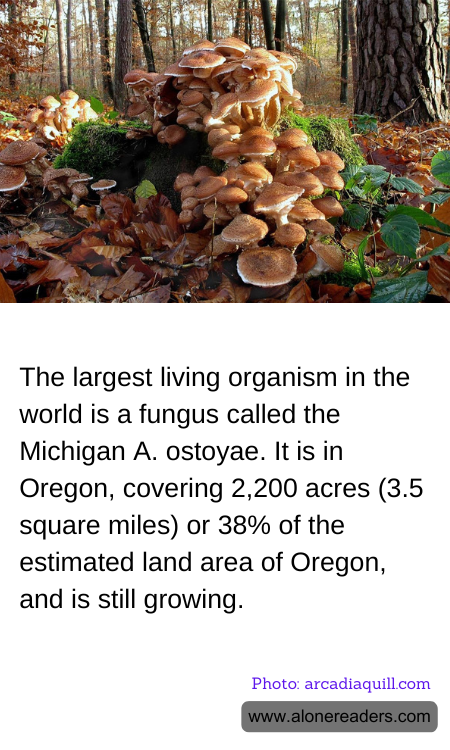
Often when we think of the largest living organism, blue whales or giant redwoods might come to mind. However, they are dwarfed by an organism that is not only inconspicuous but also often overlooked: a fungus. In the Blue Mountains of eastern Oregon, a particularly extraordinary specimen resides – the Armillaria ostoyae, colloquially known as the "Humongous Fungus." Covering more than 2,200 acres, this fungus is thought to be the largest living organism currently known on Earth by area.
The Armillaria ostoyae of Michigan is interestingly situated entirely underground, making it less visually perceptible than other giant organisms. Its physical body is mostly composed of a vast network of fungal threads known as mycelium that permeate the soil and wood, decomposing dead material and recycling nutrients in the forest ecosystem. This fungal network can be surprisingly old, with estimates suggesting some parts may be around 2,400 years old, although determining the precise age of such a widespread and interconnected organism can be incredibly challenging.
More than just a biological marvel, this giant fungus has significant ecological roles, including acting as both a parasite and a decomposer. It can attack living trees, contributing to forest succession by breaking down wood and making nutrients available to other plants. However, this also means it poses a threat to forestry, capable of causing widespread tree death, which impacts both the ecosystem and local economies dependent on timber.
Yet, despite its potential for destruction, the Humongous Fungus is a crucial part of its ecosystem. Its actions help to ensure the health and longevity of forests by clearing away weak or dying trees, thereby making space and resources available for healthier ones. It's a vivid illustration of the complexity and interconnectedness of forest ecosystems, where even a single organism can have a profound impact on its environment.
This giant fungus serves as a reminder of the remarkable, often hidden wonders of nature, and it underscores the importance of fungi as vital but often underappreciated components of ecological health. As it continues to grow and impact its surroundings, the Armillaria ostoyae will undoubtedly remain a subject of fascination and study, offering valuable insights into the life cycles of forests and the incredible, often hidden, diversity of life on Earth.