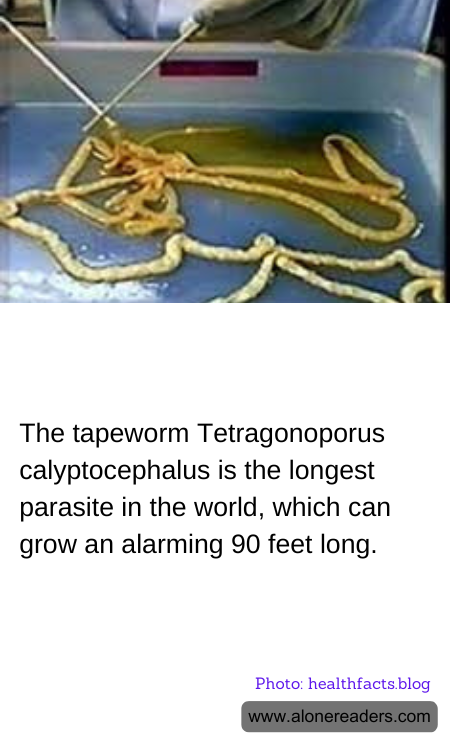
Tetragonoporus calyptocephalus, an often-overlooked marine parasite, has gained recognition for its astonishing size, as it can grow up to an incredible 90 feet in length, making it the longest parasitic organism known in the world. Found primarily in the bodies of sharks and rays, this tapeworm belongs to the cestode family, a group known for their segmented bodies and parasitic lifestyle, latching onto the intestines of their hosts.
The life cycle and biology of Tetragonoporus calyptocephalus are fascinating. The tapeworm relies on an intricate life cycle typically involving multiple hosts. Immature stages of the parasite are often ingested by smaller intermediate hosts such as fish. As these infected fish are consumed by larger predators like sharks and rays, the tapeworm continues its development, culminating in its massive adult form residing within the intestines of its final host. These tapeworms attach themselves to the gut lining using their scolex, which is equipped with suckers and sometimes hooks, drawing nutrients directly from the host's digested food.
Despite the alarm such a sizable parasite might raise, Tetragonoporus calyptocephalus typically does not cause significant harm to its host under normal circumstances, demonstrating a well-adapted parasitic relationship. However, infestations can lead to health issues for the host if the parasite load is excessively high.
Studying Tetragonoporus calyptocephalus provides insights not only into its own species but also into the intricate balance of marine ecosystems. It underscores the importance of parasites in the natural world, acting as indicators of the health of marine environments and the species that inhabit them. Additionally, research into this tapeworm and others like it can help develop better methods to manage parasitic infections in both wild and captive marine populations, aiding in the conservation efforts for endangered shark and ray species.
While definitely not the most charismatic of marine species, Tetragonoporus calyptocephalus serves as a key player in the ecological and biological research fields, illustrating the complex and often hidden relationships that sustain life in the ocean's depths.
