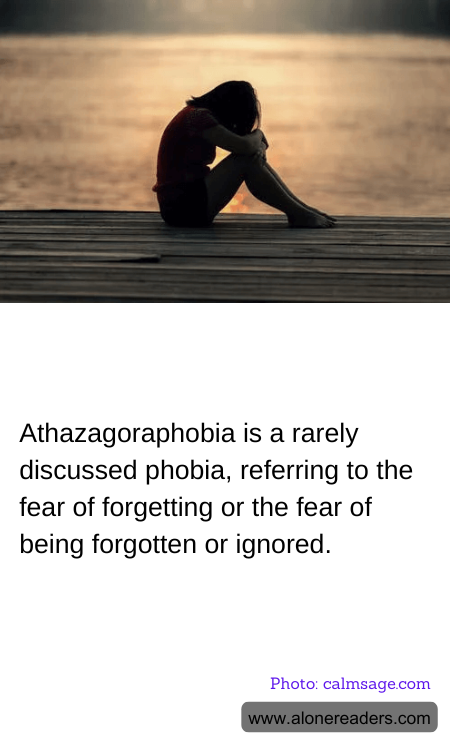
More About This Card
Athazagoraphobia is an intriguing and complex condition that grips individuals with an overwhelming fear of forgetting or being forgotten or ignored. This fear often extends beyond simple forgetfulness, tapping into deeper anxieties related to one's existence and relevance in the social world. Unlike more common phobias such as arachnophobia (fear of spiders) or acrophobia (fear of heights), athazagoraphobia may not seem immediately palpable, yet its impact on an individual's life can be profound and debilitating.
The roots of athazagoraphobia can be as varied as the individuals it affects. For some, this fear stems from a personal experience of being neglected or overlooked during a crucial period of their lives, leading to a lasting impression of their invisibility in the social fabric. For others, the phobia may be linked to a deep-seated fear of dementia or other memory-affecting conditions, sparking anxiety about losing their most precious memories and thus, their identity.
Living with athazagoraphobia can severely limit a person's ability to engage with the world. Social interactions can become fraught with anxiety, with sufferers constantly worried that they will either forget important details about their interactions or, conversely, be forgotten by others. This can lead to withdrawal from social activities, reinforcing the very isolation they fear and creating a vicious cycle of loneliness and despair.
Treatment for athazagoraphobia, like many phobias, primarily involves psychotherapy. Cognitive-behavioral therapy (CBT) is particularly effective, as it challenges the distorted beliefs associated with the phobia and gradually decreases the avoidance behavior by encouraging individuals to face their fears in a controlled environment. Additionally, support groups can also provide a safe space for sufferers to share their experiences and strategies for coping, offering a sense of community and understanding that is often missing in their lives.
Athazagoraphobia highlights a fundamental human need for connection and remembrance. While it may not be as widely recognized as other phobias, the pain it causes is no less real. Recognizing and validating the experiences of those who live with athazagoraphobia is a crucial step towards helping them reclaim their lives from the shadows of obscurity and anxiety. Encouraging open discussions about such phobias can foster greater empathy and aid in breaking down the stigmas associated with mental health issues.