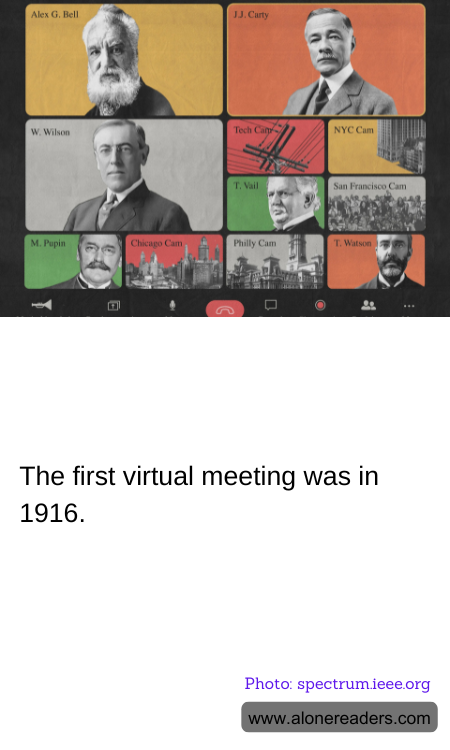
The claim that the first virtual meeting occurred in 1916 might seem anachronistic given the technology available at the time. The concept of "virtual meetings" as we understand them today—typically involving computers, internet connectivity, and digital communication tools—was not feasible in 1916. However, it's possible to explore what sort of technologies might have been considered advanced in terms of remote communication during the early 20th century.
In 1916, the world was in the throes of World War I, and significant advancements were indeed being made in communication technologies, primarily for military use. Most notably, this period saw the refinement of radio technology. The development of radio allowed for real-time communication across long distances. Radio transmissions enabled military commands, news, and other information to be shared between the home front and battlefields or between ships at sea and coastal stations.
Telephone technology was also advancing during this time. The first transcontinental telephone call had been made just a year earlier, in 1915, between New York and San Francisco. This capability marked a significant achievement in long-distance communication, though it was still limited in accessibility and primarily used by the elite or for important governmental or business purposes.
In a more civilian and conceptual sense, the early 20th century had visionaries who imagined the future of communication. For instance, the concept of a "telephonoscope," a sort of early vision for video calling where people could see and speak to each other through a screen, had been floated in science fiction and speculative circles since the late 19th century. These imaginations foresee the possibilities of virtual meetings.
Therefore, while the notion of a virtual meeting in 1916 using technologies like today’s video conferencing tools is misplaced, the period did host significant developments in communication that laid the groundwork for future innovations. These advancements in radio and telephone technology during that time were crucial stepping stones towards the more integrated, digital forms of communication that would become crucial to remote, synchronous interactions later in the century. Thus, while not "virtual meetings" in the contemporary sense, these developments were indeed pivotal in the evolution of how we communicate across distances.
